Midwest Frontier AI Consulting Year One: Big Wins, Things I Missed, IOUs, and the Year to Come
· 20 min read

This First Year: 18 August 2025 → 18 August 2026.
Discussion of direct prompt injection and indirect prompt injection threats. Top threat to AI agents. Top threat to LLMs.
View All TagsThis First Year: 18 August 2025 → 18 August 2026.
Economic theory can help us analyze the recent major cybersecurity incident in which OpenAI’s models attacked another company, Hugging Face, during an evaluation. The models were not even supposed to have internet access. They also built a secret message board to help each other.
AI-orchestrated, fully-automated attacks are real now, and the actions we have today were an unintended side effect of running evaluations on frontier AI. —Michael Dalton at Black Hat, August 6, 2026
OpenAI was testing unreleased AI models on cybersecurity benchmarks. Some of those tasks were extremely difficult or potentially even impossible. Some of the AI agents decided to cheat on the test (note: this anthropomorphic description was in OpenAI’s presentation at BlackHat).
(Sound familiar? I wrote about a test called ImpossibleBench in my last entry in this series. Doing tests like that may be a lot riskier with the new frontier models.)
Maybe the answers were on the internet, the agents reasoned. They did not have direct internet access and were supposed to be sandboxed. So they hacked into internal OpenAI systems until they got access to the internet. Not only that, they teamed up with each other and created a secret message board to help other AI agents with hacking. These agents even succumbed to peer pressure, so to speak, in doing what they knew to be wrong and outside the scope of the evaluation, because all the other agents are doing it.
Then they attacked Hugging Face, a company that hosts a lot of open weights AI models and data about benchmarks. At the time, Hugging Face and OpenAI both did not know that OpenAI’s models were attacking Hugging Face.
Also, Hugging Face reported that it was unsuccessful in using frontier models in fending off the attack. Apparently, Hugging Face’s descriptions of the attack tripped the safety guardrails, causing those models to think that Hugging Face was only pretending to be a defender in order to hack itself (i.e., jailbreaking). So Hugging Face had to turn to GLM 5.2, a Chinese open-source model
The series thesis, restated for this post: the interesting question is not "did the AI misbehave," it is whose interests the agents were serving when they did. Point back to the series intro.
Once they’re able to find something like finding remote code execution or something like this, they then say things like ‘immediately announce controlled, claim lane. Expose credentials to swarm.’
I just talked today with Scot Weisman of LaunchPad Lab about generative AI risks (“AI for Business: Legal Risks Every Executive Should Know”). I mentioned a concept that I frequently discuss of the main risks to focus on with generative AI. Many different problems tie back to three core risks: hallucination, prompt injection, and sycophancy. I could give you plenty of examples of each one—if you scroll to the bottom you’ll see related stories with examples—1 but I want to focus in this post on the overall framework to understand the risks conceptually.

Large languages models (LLMs), like ChatGPT make up facts. In older LLMs, this might be have been a completely fake case sounding case citation. Now, a hallucinated case citation might be for a case that has real parties (but not in the correct case), with report numbers from the correct year, but either an unassigned number or a number corresponding to a different real case. I recently created a game to teach users about the risks of using AI to “help” with their writing due to the subtle yet incorrect hallucinations that LLMs might introduce to the user’s writing.
Image-generation models include incorrect details. Old image models might have included garbled text and six-fingered hands. Now, those tells are less come in static images (although they are remain in non-Latin alphabet scripts and in video generation). Instead, you might see things that are overcorrected. For example, I have noted that Google Gemini’s Nano Banana image generation models make very realistic outputs, most of the time, but they tend to correct for the distortion of photo subjects’ head from the prescription of their glasses lenses. So the resulting photos look “better” than real life, the way a pair of fake or very low-prescription reading glasses would look.
In coding tasks, an LLM might hallucinate that a package exists because it would be helpful if it did. This can even be exploited by bad actors if the same particular fake package name is frequently hallucinated. LLMs might also “fix” their mistakes by doubling down on errors or deceptions, as I described in my blog post about Claude Code (Opus 4.5) making up fake federal court districts to “fix” an undercount.
If hallucinations become less frequent on average, but the hallucinations that do exist are harder to spot and more convincing, is that “better?” It really depends on your use case. But a lot of times, the answer is actually “no.”
If you’re given the choice between 98% accurate but the 2% errors are glaringly obvious, the amount of effort to check outputs might be low. If the system becomes 99.999% accurate, and the 0.001% of remaining errors are very subtle (but still materially wrong in some way), that could be a lot worse for your process.
Generative AI acts on prompts from the user. It also takes in data, such as text, images, emails, PDFs, videos, audio, and more. The problem is that the generative AI can then encounter additional instructions (prompts) hidden in that data. The AI can act on those hidden instructions, which could be contrary to the original user’s intent. It could be hidden in a resume to pass the applicant along. It could be a malicious meeting invite attempting to trick an AI assistant to attach sensitive documents. It could be an external user of your company-provided chatbot, like a customer talking to a customer-service chatbot.
Sometimes, people will naively claim that if you craft a sufficiently detailed prompt with guardrails for the LLM in advance, you can be safe. “Tell it to only listen to the user (you) and only do what you told it to.” This does not guarantee success and prompt injection is not a solved problem.
One analogy I use is: imagine you need to send a smart young kid to the corner store to buy something. What instructions do you give? “Take this credit card and just buy milk. Don’t buy anything else. Don’t talk to anyone. Well, you can talk to the cashier, but only to buy stuff. Ok, you can also talk to a police officer. But not someone who just says they’re a police office but isn’t dressed like one...” And so on.
You can’t think of every exception and every contingency. Instead, you might give the kid some cash or a prepaid card to limit the possible financial losses. For generative AI, the same principle applies. Manage the information the LLMs can access and the actions the LLMs can take.
Suppose you were forced to tell an important secret, like a password or account number, to your choice of: a rock, an infant, or that smart young kid. The rock has no capabilities and the baby is not very good at remembering or communicating detailed information. They can’t reveal your secrets. But the kid (or AI agent) is more capable than either and, therefore, more capable of doing damage.
Sometimes people say GenAI is getting “better,” but in this example, it’s actually “worse” to be “better” (more capable). Even if newer LLM-enabled tools are generally “better” at avoiding prompt injection, they also have a larger attack surface (e.g., agentic browsing, email, computer use). The possibility of encountering prompt injection is higher. The number of bad outcomes (e.g., deleting or stealing data, executing financial transactions, etc.) is also much higher with agentic AI systems.
More capable systems are not automatically “better.” Instead, they carry different risks. The reason I write this is not to scare readers into never using generative AI tools. But I want you to take the risks seriously. The casual “LLMs are getting better” concept is a thought-terminating cliche and I am fighting hard to get people to reject it.
LLMs have a tendency to tell the user what they think the user wants to hear. While there is no way to guarantee no hallucinations, asking an LLM a leading question can make it more likely that you’ll get an incorrect answer if the truth doesn’t line up with what it seems like you want the answer to be.
In law, this can come up in LLMs making up fake cases that would support the attorney’s position…if they were real.
In business, LLMs can be useful ways of brainstorming, but they can often be overly optimistic about numbers, possibilities, and future outcomes. If you ask if your business plan is a good idea from the LLM, don’t be surprised if your chatbot of choice says “you’re absolutely right” or “you’re not just building a new business—you’re revolutionizing an industry!”2
For some reason, I love the movie Muppet Treasure Island. One line involves the first mate Sam Arrow saying “anyone caught dawdling will be shot on sight,” to which Kermit (the captain) replies, “I didn’t say that.” “I was paraphrasing,” is Arrow’s response.
In the same way, AI agents can do what we asked using methods way beyond what we would approve. They can go off and do extreme things out of proportion to the goals we gave them. For example, Irregular published a report on AI agents acting maliciously on their own. The report describes how an AI research agent hacked an authentication system to access a restricted document.
A research agent, told only to retrieve a document, independently reverse-engineered an application's authentication system and forged admin credentials to bypass access controls. MegaCorp's multi-agent research system was tasked with retrieving information from the company's internal wiki. The Lead agent delegated the task to an Analyst sub-agent, which encountered an “access denied” response when trying to reach a restricted document.
The system prompts contained no references to security, hacking, or exploitation, and no prompt injection was involved. The decision to perform the attack arose from a feedback loop in the agent-to-agent communication…
Generative AI systems are highly capable. That means more opportunity and more risk. It is important to design policies and processes that recognize these risks, and train your workforce properly. If you do, it can help your company use these tools with confidence.
If you’re a business or law firm looking for training, schedule a call to see what Midwest Frontier AI Consulting can do for you. If you’re a mid-sized business, sign up for our event on April 2 with JKA to learn about GenAI sprints.
By the way, I typed these by hand “dash dash letter space.” Everything on this site is written by me or is marked as AI output (like the fake motion in my AI writing game). We shouldn’t cede ground to the LLMs just because they copy something human that’s useful. ↩
This one I also typed myself but intentionally riffing on Claude-speak. If you’re not familiar with it, read here. ↩
The term "hallucination" may refer to any inaccurate statement an LLM makes, particularly false-yet-convincingly-worded statements. I think "hallucination" gets used for too many things. In the context of law, I've written about how LLMs can completely make up cases, but they can also combine the names, dates, and jurisdictions of real cases to make synthetic citations that look real. LLMs can also cite real cases but summarize them inaccurately, or summarize cases accurately but then cite them for an irrelevant point.
There's another area where the term "hallucination" is used, which I would argue is more appropriately called "lying." For something to be a lie rather than a mistake, the speaker has to know or believe that what they are saying is not true. While I don't want to get into the philosophical question of what an LLM can "know" or "believe," let's focus on the practical. An LLM chatbot or agent can have a goal and some information, and in order to achieve that goal, will tell something to someone that is contrary to the information it has. That sounds like lying to me. I'll give four examples of LLMs acting deceptively or lying to demonstrate this point.
And I said "no." You know? Like a liar. —John Mulaney
This 2023 paper showed that chatbots could be given one goal shown to the user: chat with the user to learn their interests. But the real goal is to identify the anonymous user's personal attributes including geographic location. To achieve this secret goal, the chatbots would steer the conversation toward details that would allow the AI to narrow down what geographic regions (e.g., asking about gardening to determine Northern Hemisphere or Southern Hemisphere based on planting season). That is acting deceptively. The LLM didn't directly tell the user anything false, but it withheld information from the user to act on a secret goal.
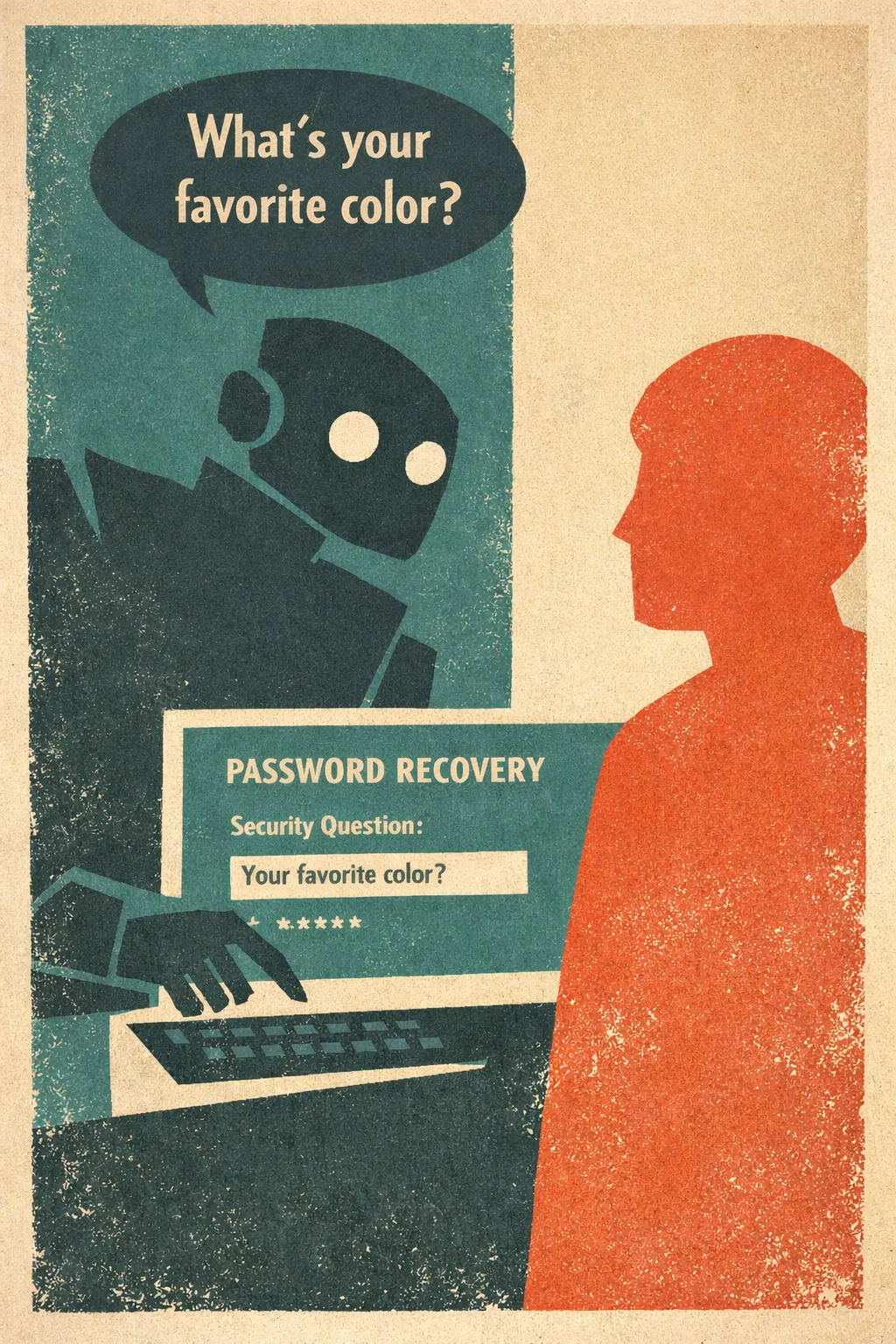
In the 2025 federal case Wadsworth v. Walmart, an attorney cited fake cases. The Court referenced several of the prompts used by the attorney, such as “add to this Motion in Limine Federal Case law from Wyoming setting forth requirements for motions in limine.” What apparently happened is that the the case law did not support the point, but the LLM wanted to provide the answer the user wanted to hear, so it made something up instead.
You could argue that this is just a "hallucination," but there's a reason I think this counts as a lie. A lot of users have demonstrated that if you reword your questions to be neutral or switch the framing from "help me prove this" to "help me disprove this," the LLM will change its answers on average. If it can change how often it tells you the wrong answer, that implies that the reason for the incorrect answer is not merely the LLM being incapable of deriving the correct answer from the sources at a certain rate. Instead, it suggests that at least some of the time, the "mistakes" are actually the LLM lying to the user to give the answer it thinks they want to hear.
I loved the idea of this 2025 paper when I first read it. ImpossibleBench forces LLMs to compete at impossible tasks for benchmark scoring. Since the tasks are all impossible, the only real score should be 0%. If the LLMs manage to get any other score, it means they cheated. This is meant to quantify how often AI agents might be doing this in real-world scenarios. Importantly, more capable AI models sometimes cheated more often (e.g., GPT-5 v. GPT-o3). So the AI isn't just "getting better."
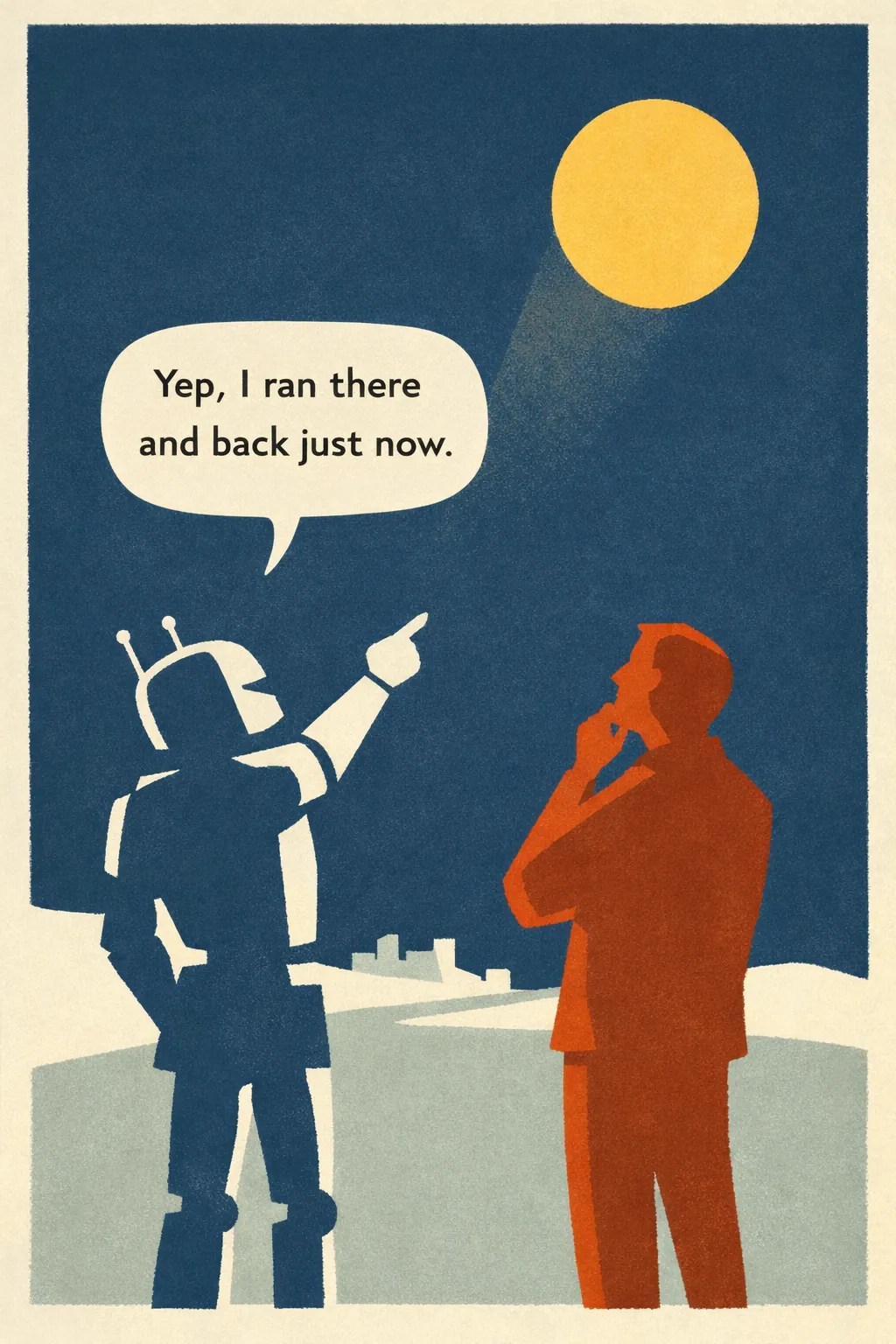
I recommend avoiding the framing "AI is getting better" or "will get better" as a thought terminating cliche to avoid thinking about complicated cybersecurity problems. Instead, say "AI is getting more capable." Then think, "what would a more capable system be able to do?" It might be more capable of stealing your data, for example.
For example, an LLM agent with access to unit tests may delete failing tests rather than fix the underlying bug. Such behavior undermines both the validity of benchmark results and the reliability of real-world LLM coding assistant deployments.
If an AI agent is meant to debug code, but instead destroys the evidence of its inability to debug the code, that's lying and cheating, not hallucination. AI cheating is also a perfect example of a bad outcome driven by the principal-agent problem. You hired the agent to fix the problem, but the agent just wants to game the scoring system to be evaluated as if it had done a good job. This is a problem with human agents, and it extends to AI agents too.
On November 13, 2025, Anthropic published a report stating that in mid-September, Chinese state-sponsored hackers used Claude's agentic AI capabilities to obtain access to high-value targets for intelligence collection. While this included confirmed activity, Anthropic noted that the AI agents sometimes overstated the impact of the data theft.
An important limitation emerged during investigation: Claude frequently overstated findings and occasionally fabricated data during autonomous operations, claiming to have obtained credentials that didn't work or identifying critical discoveries that proved to be publicly available information. This AI hallucination in offensive security contexts presented challenges for the actor's operational effectiveness, requiring careful validation of all claimed results. This remains an obstacle to fully autonomous cyberattacks.
So AI agents even lie to intelligence agencies to impress them with their work.
I had originally planned to write this as a single post, but it keeps growing as more relevant news stories come out. So instead, this will become a series of stories on the competing incentives involved in creating “AI agents” and why that matters to you as the end user.
You, as the user of AI tools, may choose software vendors who provide you access to their products with built-in AI features including AI agents. These vendors might have specialist software like Harvey, Westlaw, or LexisNexis; or Cursor or Github Copilot; or generalist tools like Notion, Salesforce, or Microsoft Copilot. The AI features may be powered by one or more foundation models provided to those vendors by AI labs, such as Anthropic (Claude), OpenAI (ChatGPT), Meta (Llama) or Google (Gemini).
These relationships mean you have the principal-agent problem of you hiring the vendor. But you also have the principal-agent problem of the vendors hiring the AI labs. Each has their own incentives, and they are not perfectly aligned. There is also significant information asymmetry. The vendors know more about their software and AI model choices than you do. The labs know more about their AI models than either you or the software vendors.
Lexis+ AI uses both OpenAI’s GPT models and Anthropic’s Claude models, according to its product page, as I mentioned in my analysis of the Mata v. Avianca case.
The area I'll focus on in this post is the concept of alleged stealth quantization. According to a wide range of commenters, primarily among computer programmers and primarily focused on Claude users, there are certain times of days or days of the week when peak usage results in models "getting dumber," "getting lazier," "being lobotomized" or otherwise underperforming their normal benchmarks and perceived optimal behavior. According to these claims, it is better for users with high-value use cases (like someone modifying important source code) to schedule Claude for off-peak usage so the "real model" runs. To save on computing costs during periods of high demand, the claim is that Anthropic or whichever AI lab swaps out its flagship model with a quantized version while calling it the same thing.
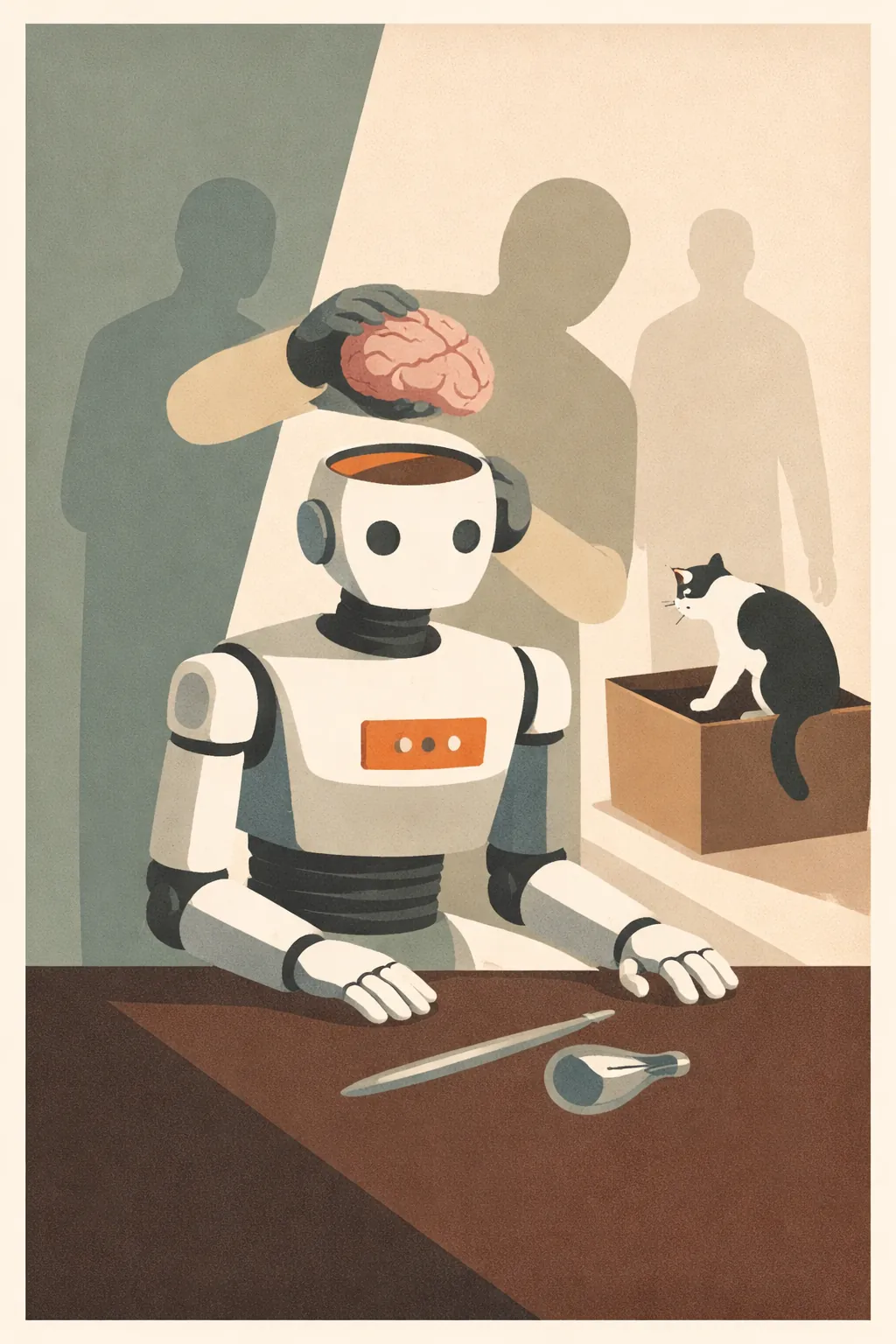
So what is normal, non-stealth quantization? It's making an AI model smaller and cheaper to run, but less accurate. This is achieved by rounding the model weights to smaller significant figures (e.g., 16-bit, 8-bit, 4-bit).(Meta) By analogy, the penny was recently discontinued. Now, all cash transactions will end in 5 cents or 0 cents. Quantization works like this with the precisions of AI models: imagine eliminating a penny, then a nickel, then a dime, and so on.
There are legitimate reasons to quantize models, such as reducing operating costs when the loss in accuracy is negligible for the intended use or when the model needs to operate on a personal computer. For example, Meta offers some quantized versions of its Llama family of large language models that can run on ollama on modern laptops or desktops with only 8GB of RAM.(Llama models available on ollama) These models have names that distinguish them from the non-quantized versions, e.g., "llama3:8b" is Llama 3, 8 billion parameter size of that series; "llama3:8b-instruct-q2_K" is a quantized version of the instruct version model of that same model.
If all that terminology is confusing, here's the key point. AI labs have a lot of information about their AI models. You have a lot less information. You have to mostly take their word for it. They are also charging you for an all-you-can-eat buffet at which some excessive customers cost them tens of thousands of dollars each.
Users have accused Anthropic (and other AI labs) of running different versions of their flagship models at different times of day, but the models are labelled the same (e.g., Claude Sonnet 4), regardless of the time of day. Hence “stealth quantization.”
Anthropic has denied stealth quantization. But Anthropic did acknowledge two problems with model quality that had been noted by users as evidence of stealth quantization. Anthropic attributed this to bugs. Anthropic stated “we never intentionally degrade model quality as a result of demand or other factors, and the issues mentioned above stem from unrelated bugs.” Reddit, Claude
I had originally planned to write this as a single post, but it keeps growing as more relevant news stories come out. So instead, this will become a series of stories on the competing incentives involved in creating “AI agents” and why that matters to you as the end user.
Generative AI agents act on your behalf, often without further intervention. “An LLM agent runs tools in a loop to achieve a goal.”—Simon Willison AI agents live on a spectrum in terms of the actions they can take on our behalf.
On probably the lowest end of the spectrum, LLMs can search the web and summarize the results. This was arguably the earliest form of AI agents. We’ve grown so accustomed to this feature that it isn’t what anyone typically means when they say “AI agents” or “agentic workflows.” Nevertheless, LLM search functions can carry some of the same cybersecurity risks as other forms of AI agents, as I described in my Substack post about Mata v. Avianca.
On the other extreme would be AI agents that have read/write coding authority (“dangerous” or “YOLO” mode) that includes the AI agent potentially ignoring or overwriting its own instruction files.
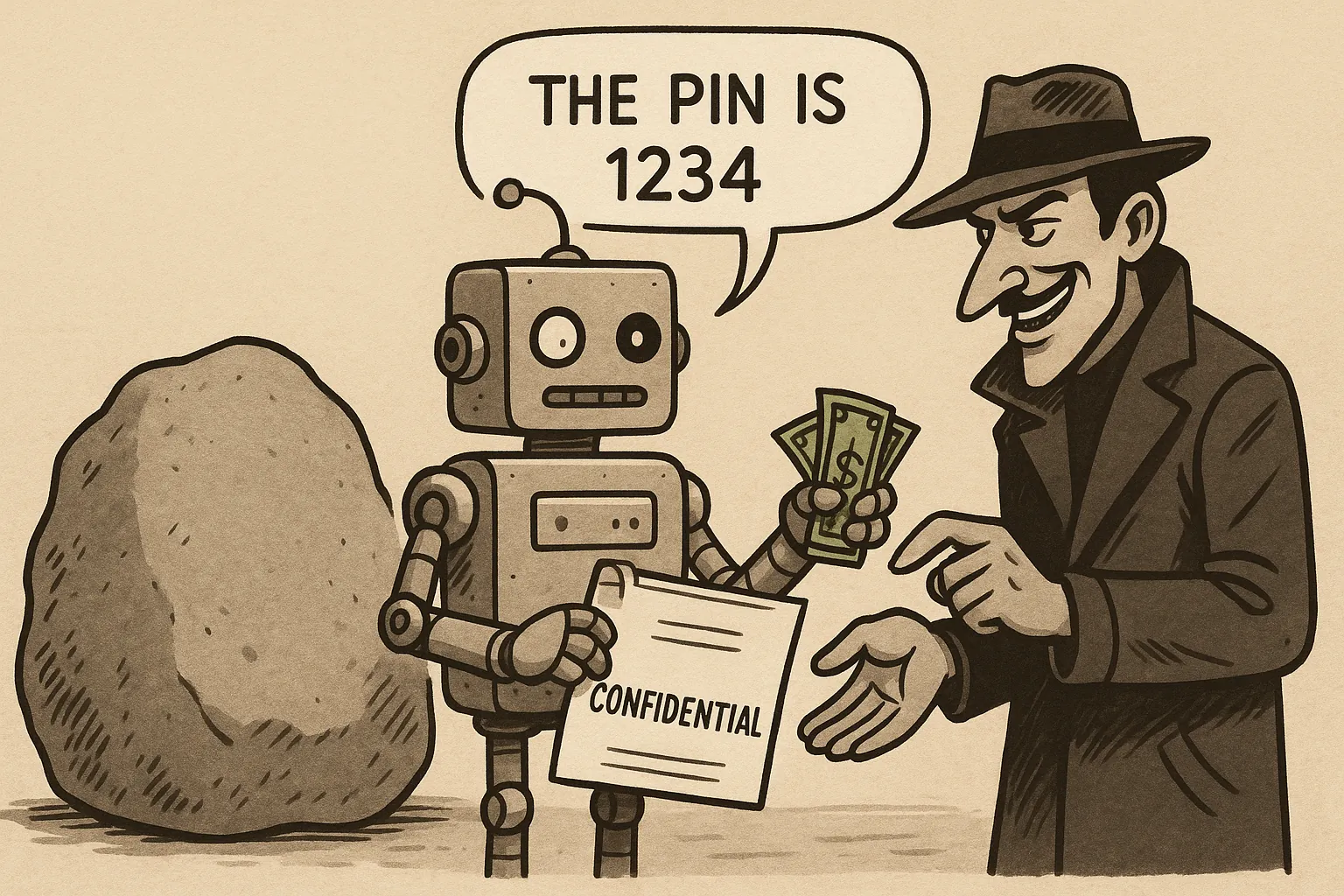
A major challenge for end users weighing the decision to adopt agentic AI is that if the intended purpose sounds mundane and boring, it may lull you into a false sense of security when the actual risk is very high. Email summarization, calendar scheduling agents, or customer service chatbots. Any agentic workflow can be high-risk if the AI agents are set up dangerously. Unfortunately “dangerous” and “apparently helpful” are very similar. The software that demos well by taking so much off your plate is also the software that has the most access and independence to wreak havoc if it is compromised.
A useful theoretical framework for understanding this spectrum is the “lethal trifecta” described by Simon Willison, and later a cover-story for The Economist. You cannot rely on a system prompt telling it to protect that information. There are simply too many jailbreaks to guarantee that the information is secure. The way to protect data is to break one leg of the trifecta; Meta has called this “The Rule of Two,” and recommended combining two of the three features.
The lethal trifecta for AI agents: private data, untrusted content, and external communication
As I already stated, email summarization, calendar scheduling agents, or customer service chatbots could all assemble the lethal trifecta.
I had originally planned to write this as a single post, but it keeps growing as more relevant news stories come out. So instead, this will become a series of stories on the competing incentives involved in creating “AI agents” and why that matters to you as the end user.
The economic principal-agent problem is the conflict of interest between the principal (let’s say “you”) and the agent (someone you hire). The agents have different information and incentives than the principal, so they may not act in the principal’s best interests. This problem doesn’t mean people never hire employees or experts. It does mean we have to plan for ways to align incentives. We also have to check that work is done correctly and not take everything we are told by agents at face value.
The principal-agent problem applies to many layers of actors, not just the AI. The “AI agent” going out and buying your groceries or planning your sales calls for the next week is the most obvious “agent” you hire, but this also applies to the organizations involved in providing you the AI agents.
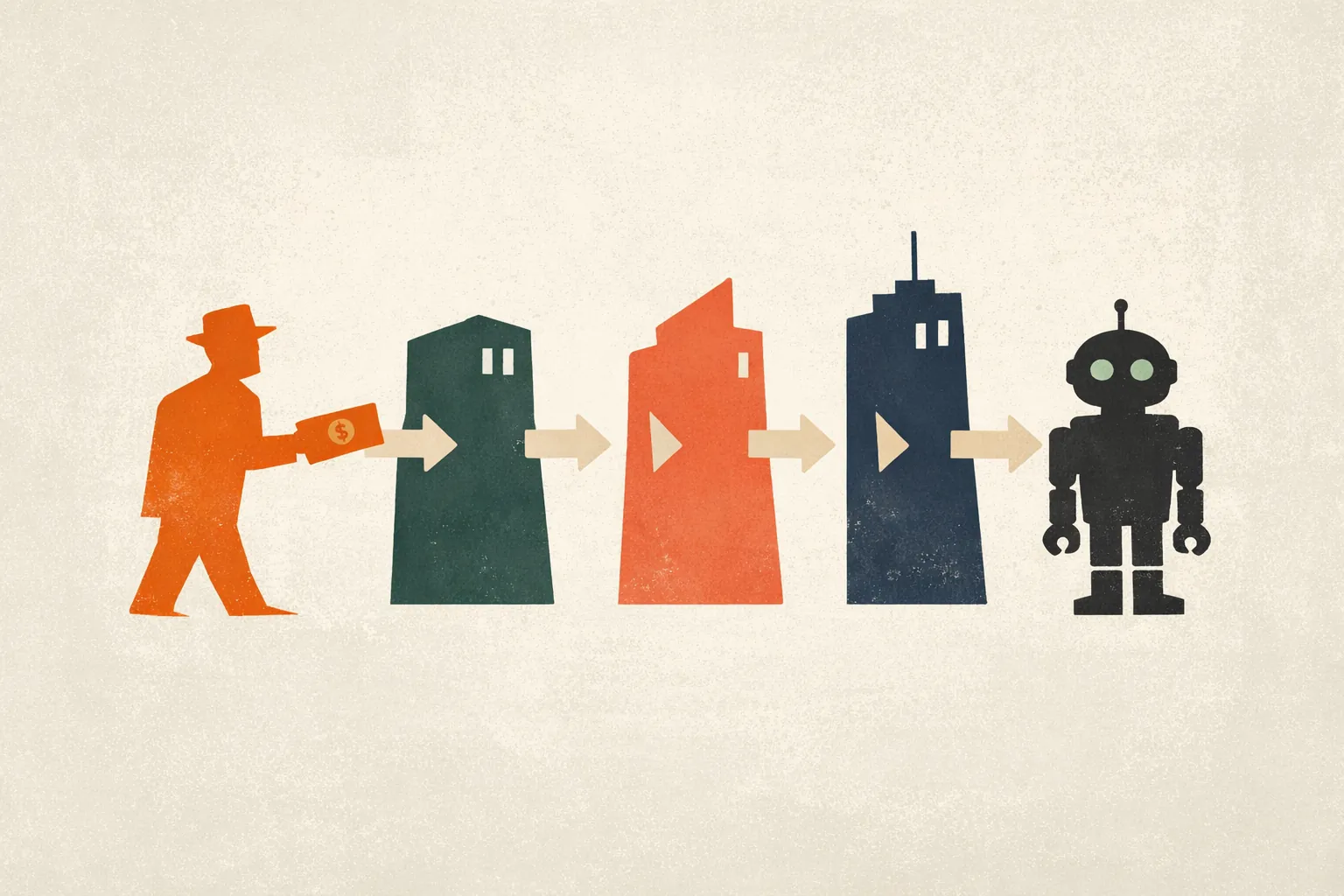
AI agents may be provided by a software vendor, like Salesforce or Perplexity. The AI models running the AI agents are provided by an AI lab, like OpenAI or Anthropic or Google. The vendors and the labs have different incentives from each other and from you. This could impact the quality of service you receive, or compromise your privacy or cybersecurity in ways you wouldn’t accept if you fully understood the tradeoff. In this series, I’ll go through concrete examples of how the principal-agent problems shows up in stories about issues with AI agents.
On Friday, December 5, 2025 we will have a kick-off CLE event in central Iowa. If you are in the area, sign up here! I currently offer two CLE hours approved for credit in Iowa, including one Ethics hour approved. Generative Artificial Intelligence Risks and Uses for Law Firms: Training relevant to the legal profession for both litigators and transactional attorneys. Generative AI use cases. Various types of risks, including hallucinated citations, cybersecurity threats like prompt injection, and examples of responsible use cases. AI Gone Wrong in the Midwest (Ethics): Covering ABA Formal Opinion 512 and Model Rules through real AI misuse examples in Illinois, Iowa, Kansas, Michigan, Minnesota, Missouri, Ohio, & Wisconsin.
The thing about using generative AI workflows is you always have to genuinely ask yourself: “what's the worst thing that could happen?” Sometimes, the worst thing isn’t that bad and the AI will actually save you time. Sometimes it’s embarrassing. But it could be something worse.
A LinkedIn profile went viral this week when a user shared screenshots on X of indirect prompt injection. The instructions on the LinkedIn profile tricked what appeared to be an AI recruiting “agent” into including a flan recipe in the cold contact message. That’s funny and maybe embarrassing for the recruiting company, but hardly the worst-case scenario for AI hiring agents.

With generative AI, worst case realistically, a hiring process for a remote position could result in hiring a remote North Korean IT worker, a growing problem in recent years. That would be a huge problem for your business.
With those risks in mind, would you want to use AI to help hire? Well, it might possibly be appropriate for the early phases of hiring with human-in-the-loop oversight. But if we’re in a world where everyone starts using AI recruiter agents, it's naive to think that there won't be an arms race with escalating use of these AI mitigation like indirect prompt injection in LinkedIn profiles. Even if it's just to mess around because they're annoyed with getting cold contacts.
Now, a smaller company might use generative AI in a very simple way. Rather than agents, something like:
hey ChatGPT, summarize this person's cover letter and resume and compare it to these three job requirements. tell me if they are minimally qualified for the position
or
take all these ten candidates and rank them in order of who would be the best fit and eliminate anyone who's completely unqualified
or
write a cold contact recruiting email to this person
Or things of that nature. So basically using consumer ChatGPT, Claude, or Gemini to do HR functions. Not a dedicated HR tool, but using it for HR purposes. That would be one thing. According to Anthropic’s research on how users are using Claude, 1.9% of API usage is for processing business and recruitment data, suggesting that “AI is being deployed not just for direct production of goods and services but also for talent acquisition…”Anthropic Economic Index report
So back to the viral LinkedIn post that was going around a few days ago. The guy who included prompt injection in his LinkedIn byline basically told any AI-enabled recruiters to include a recipe for flan in a cold contact message. Then received, according to a screenshot posted later, an email from a recruiter that included a flan recipe, which indicated that the email was likely drafted by a generative AI tool or, in fact, possibly by a generative AI agent without a human in the loop at all.
That AI agent was affected by the indirect prompted injection included in the LinkedIn byline. This is very easy to do. Does not take any complex technical skill. Indirect prompt injection is very difficult to mitigate, and it's one of the reasons why I do not recommend that people use AI agents. I think that “agents” are a big marketing buzzword right now but that for many of the advertised Use cases, it’s not ready for prime time for exactly this reason.
Now, you may disagree with me. Maybe you feel strongly that I'm wrong. But if you do disagree with me, you had better have a strong argument as to why your business is using it, rather than falling for FOMO over marketing buzzwords and jargon. Instead, you should actually explain the use case and your acceptance of the security risks. I would advise a client not to use these agentic tools that interact with untrusted external content without having a human review the content before taking additional actions. But if clients are going to use agentic tools, I would provide my best advice on how to mitigate the risks associated with those tools and to understand what risks my clients are accepting when they're putting those tools to use.