3 posts tagged with "Small and Medium Businesses"

Articles for small business owners or about topics impacting small and medium businesses (SMBs).

View All Tags

Need to Create a Wordcloud for Your Blog Post? Use Google Gemini (and a Piece of Paper)

· 3 min read
Chad Ratashak
Chad Ratashak
Owner, Midwest Frontier AI Consulting LLC

Paper to photo to Google Gemini

This simple workflow will be faster and give you more control over your output than using ChatGPT image generation. That’s because Google Gemini’s new image model, called “nano banana” (hence the banana emoji next to the image generation option) is a better AI model of editing photos without changing too much. Gemini also generates images more quickly than GPT-5. My rule of thumb for images is: if you want to change some specific, use Gemini; if you want to create something creative from scratch, use ChatGPT.

Step 1: Handwriting

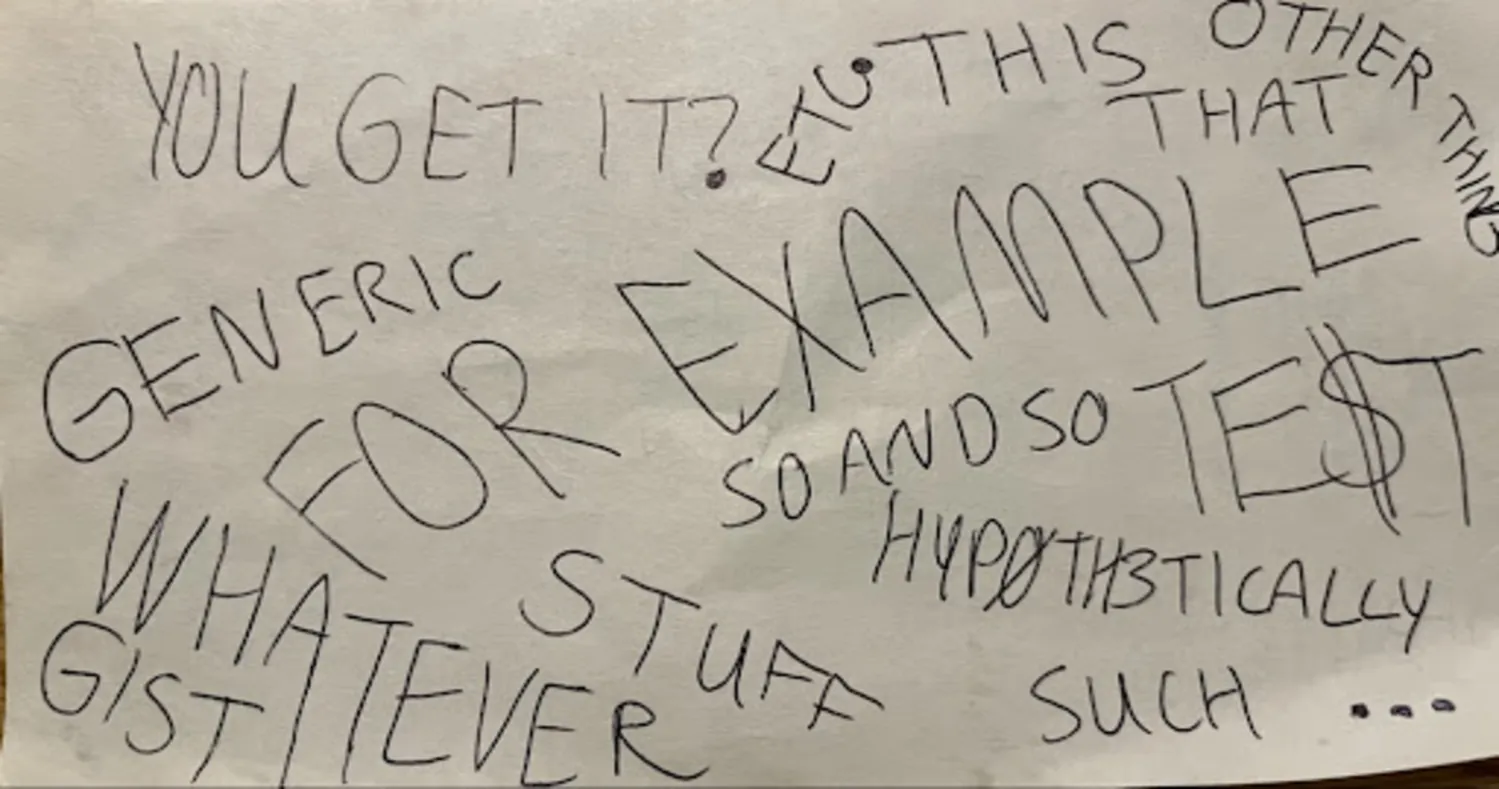
Start by writing the wordcloud you want. For my example, I wrote a bunch of generic terms that popped into my head like “example” and “whatever.” If you can’t think of the words you want, you can always generate a short list with Gemini. Vary the direction and size of the writing to make the final image more visually interesting.

Step 2: Photo of the Handwriting

Take a photo of the piece of paper. Crop out the background.

handwritten words in different directions related to generic topic

Step 3: Prompt Gemini

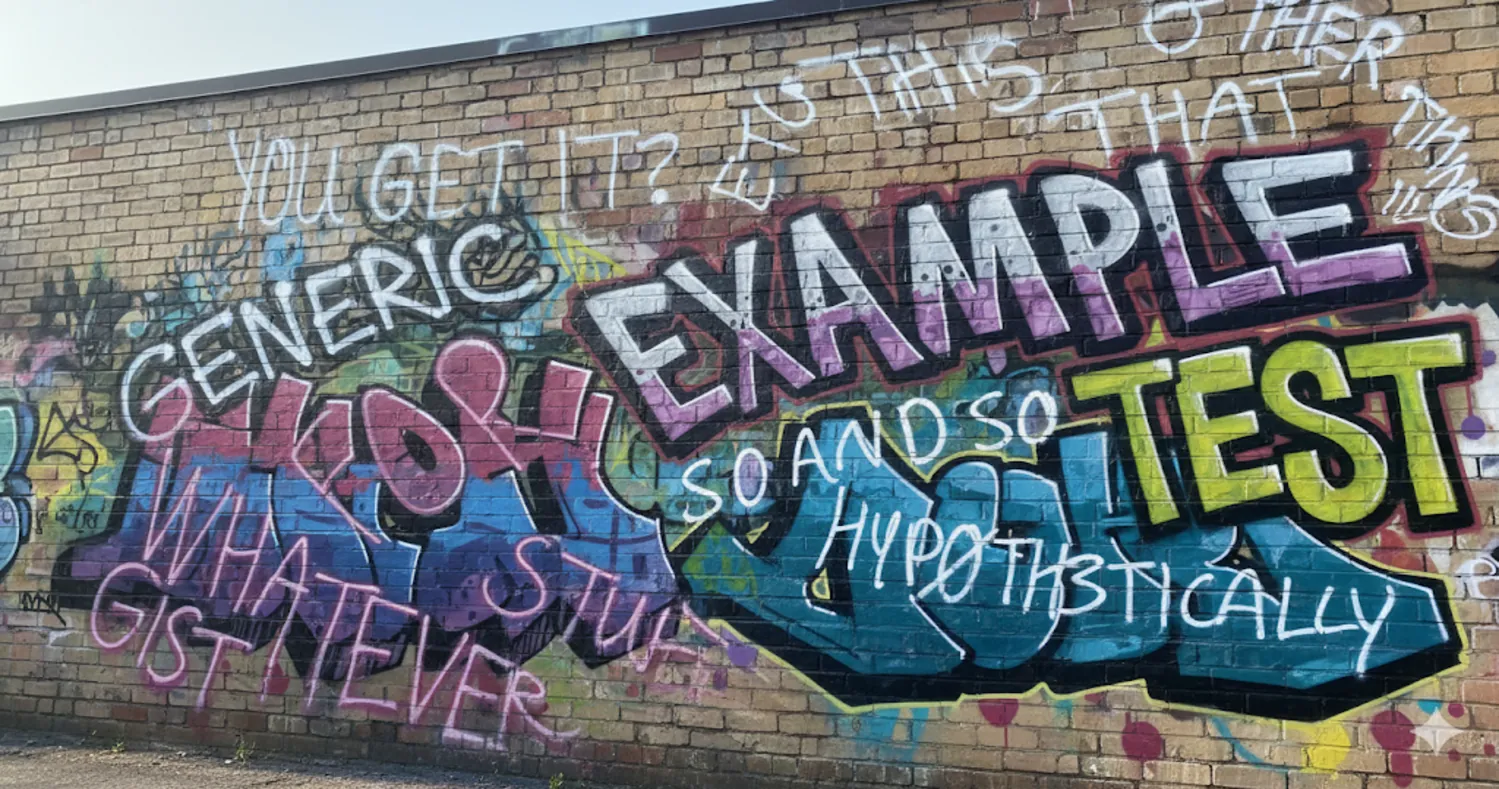
Upload the photo of the handwriting the paper to Gemini with a prompt, such as: Turn these words into the style of a graffiti mural. It should only take a few second to generate the output image. My resulting image was:

words painted in graffiti in different directions related to generic topic on a brick wall

Three Ways AI Can Make Things Up. How True But Irrelevant Can Be Harder to Correct Than Pure Nonsense.

· 5 min read
Chad Ratashak
Chad Ratashak
Owner, Midwest Frontier AI Consulting LLC

More Than One Type of Hallucination

ChatGPT sometimes makes things up. For example, ChatGPT famously made up fictional court cases that were cited by attorneys for the plaintiff in Mata v. Avianca. But totally made up things should be easy to spot if you search for the sources. It’s when there’s a kernel of truth that large language model (LLM) hallucinations can waste the most time for lawyers and judges or small businesses and their customers.

  1. A “Pure Hallucination” is something made up completely with no basis in fact.
  2. A “Hallucinated Summary” has a footnote or other citation referencing a real source, but the LLM’s description of what that source says has little if anything to do with the source.
  3. An “Irrelevant Reference” is when an LLM cites a real sources and summarizes it fairly correctly, but the citation itself is not relevant to the purpose of the citation. This might be because the information is outdated, because the point only tangentially refers to the same topic, or for other reasons.
info

These examples were derived by actually reading the sources and were not written by LLMs. All of the written content on our website and social media is human-written, unless it is an example of AI-output that is clearly labelled.

danger

AI can help people summarize or rephrase content they know well. But Midwest Frontier AI Consulting strongly encourages AI users not to rely on AI-generated overviews of content they are not already familiar with precisely because of the subtler forms of AI hallucinations described below.

Scenario 1: You Got Your Chocolate In My Case Law

  • Pure Hallucination: ** The LLM says: “Wonka v. Slugworth clearly states that chocolate recipes are not intellectual property.” ** In reality: No such case exists.

  • Hallucinated Summary: ** The LLM says: “NESTLE USA v. DOE clearly states that chocolate recipes are not intellectual property.” ** In reality: The case involves a chocolate company but is not about intellectual property rights.

  • Irrelevant Reference:

    • The LLM Says: ‘HERSHEY CREAMERY v. HERSHEY CHOCOLATE involved two parties that both owned trademarks to “HERSHEY’S” for ice cream and chocolate, respectively. This supports our assertion that chocolate recipes are not intellectual property.’
    • In reality: The facts of the case do not support the conclusion.

Three Ways Customers Learn About Your Business from Google AI (and what you can do about it)

· 5 min read
Chad Ratashak
Chad Ratashak
Owner, Midwest Frontier AI Consulting LLC

If you are a small business owner who wants nothing to do with AI, I appreciate that decision. Midwest Frontier AI Consulting supports business owners who want to use AI responsibly and business owners who want to make an informed decision not to use AI. However, you still need to learn about generative AI, even if only to avoid it and mitigate the negative effects.

Your customers are using AI to learn about your business, often without even realizing they are using AI. “Google” has been a verb for over two decades now according to Wikipedia, but “googling something,” hasn’t stayed the same. AI tools have moved into familiar areas like Google Search and Google Maps. Here are three ways your customers may be using generative AI to learn about your business from Google’s AI tools, and what you can do about it.

Google’s Gemini AI attempts to summarize website information and provide an overview. However, the AI summary can introduce errors ("hallucinations") that mislead customers. For example, a local Missouri pizzeria was inundated with customer complaints about “updated [sic, appears they meant to say ‘outdated’] or false information about our daily specials” described by Google’s AI Overview (Pizzeria’s Facebook Post).

What Not to Do

Don’t call the information “fake” if it is really information taken out of context. For example, the pizzeria’s Facebook page shows they offer a deal for a large pizza for the price of a small pizza, but only on Wednesdays (outdated information). It is still legitimate to criticize the AI and it is still legitimate to tell customers who want the deal on another day of the week that the offer is only valid on Wednesdays. However, claiming the offer is “made up by the AI” will probably not calm down a customer who may then go to the business’s Facebook profile and see several posts about similar deals (but only on Wednesdays).

Don’t simply tell customers “Please don’t use Google AI.” The customers probably do not realize they are using AI at all. The AI Overview appears at the top of Google Search. Most people probably think they are “just googling it” like they always have and don’t realize the AI features have been added in. So warning them not to use something they didn’t opt into and aren’t actively aware of using is not going to help the situation.

What To Do

  • AI-focused solutions. If AI is going to mix things up like this, you can try to: ** Delete old posts about deals that are not active or make temporary posts, so that AI hopefully won’t include the information in summaries later. ** Word posts carefully with AI in mind. Maybe “only on Wednesday” would be better than “EVERY Wednesday.” Spell out something that would be obvious to a human but not necessarily an AI, like “not valid on any other day of the week.”
  • Customer-focused solutions. Ultimately, it is hard to predict how the AI will act, though, so you will need to prepare for potentially angry customers: ** Train staff on how to handle AI-created customer confusion (or think about how you yourself will talk to customers about it). ** Post signs regarding specials and preempt some AI-created confusion.