19 posts tagged with "Hallucination"

Discussion of the problem of generative AI hallucinations.

View All Tags

Quickstart Guide to Claude Code & GitHub Desktop. With some simple examples to get started with R & Python.

· 9 min read
Chad Ratashak
Chad Ratashak
Owner, Midwest Frontier AI Consulting LLC

I have three things in mind writing this post:

  1. Intended Audience. I am writing for people like this, who are looking to get into Claude Code and haven’t used either Claude Code or GitHub. My goal is to help those getting started learn about AI hallucinations at the start and know about version control.

[NOTE: This has been reworded from the actual question]: Any guides for using Claude Code for data analysis, primarily in R? I don’t currently use Github either. Can you point me to step-by-step instruction starting with set-up and installation? I looked at other websites and have not found them to be accessible intros.

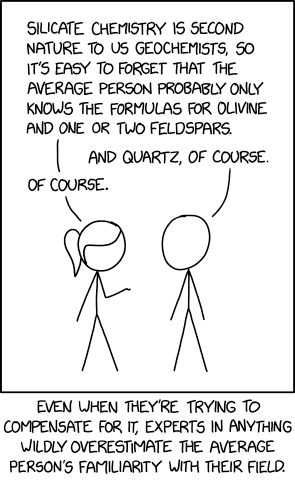
  1. Familiarity. You might not like GitHub Desktop or think some of these steps are too obvious. If you have opinions about this, skip over them to the next step. If the guide isn't helpful to you at all, you're probably not the intended audience (c.f. XKCD #2501). XKCD 2501
  2. Fast. All specific AI tutorials seem to get overtaken by events. So I'm just going to try to get this out now to help people while it's relevant. If you read this in a timely manner and have questions, reach out via Twitter/X. But if you read this in a few months and it’s already outdated, that’s just how it goes.

Plan Overview

  1. Sign up for Claude account
  2. Download Claude Desktop
  3. Sign up for GitHub account
  4. Get GitHub Desktop
  5. Connect a folder (“Add Local Repository”) for Claude Code to GitHub Desktop
  6. Then, install Claude Code
  7. Learn and Play around with Claude Code using Python and R for data viz (at the same time!)

Steps and Images

1. Sign up for Claude Account

(jump to next step)

Go to Claude.ai website.

Claude AI Google search results

Get a Claude account.

Claude login page

Choose Claude plan:

  • $20 monthly (the $17/month is if you pay for a year).
    • If you are just getting started, you probably want this option.
    • Pick Pro, then choose the Monthly billing. You can upgrade later if you keep hitting the usage limits on Claude Code.
  • $100/month for more Claude Code usage and access to Claude Cowork (Cowork is MacOS only for now).
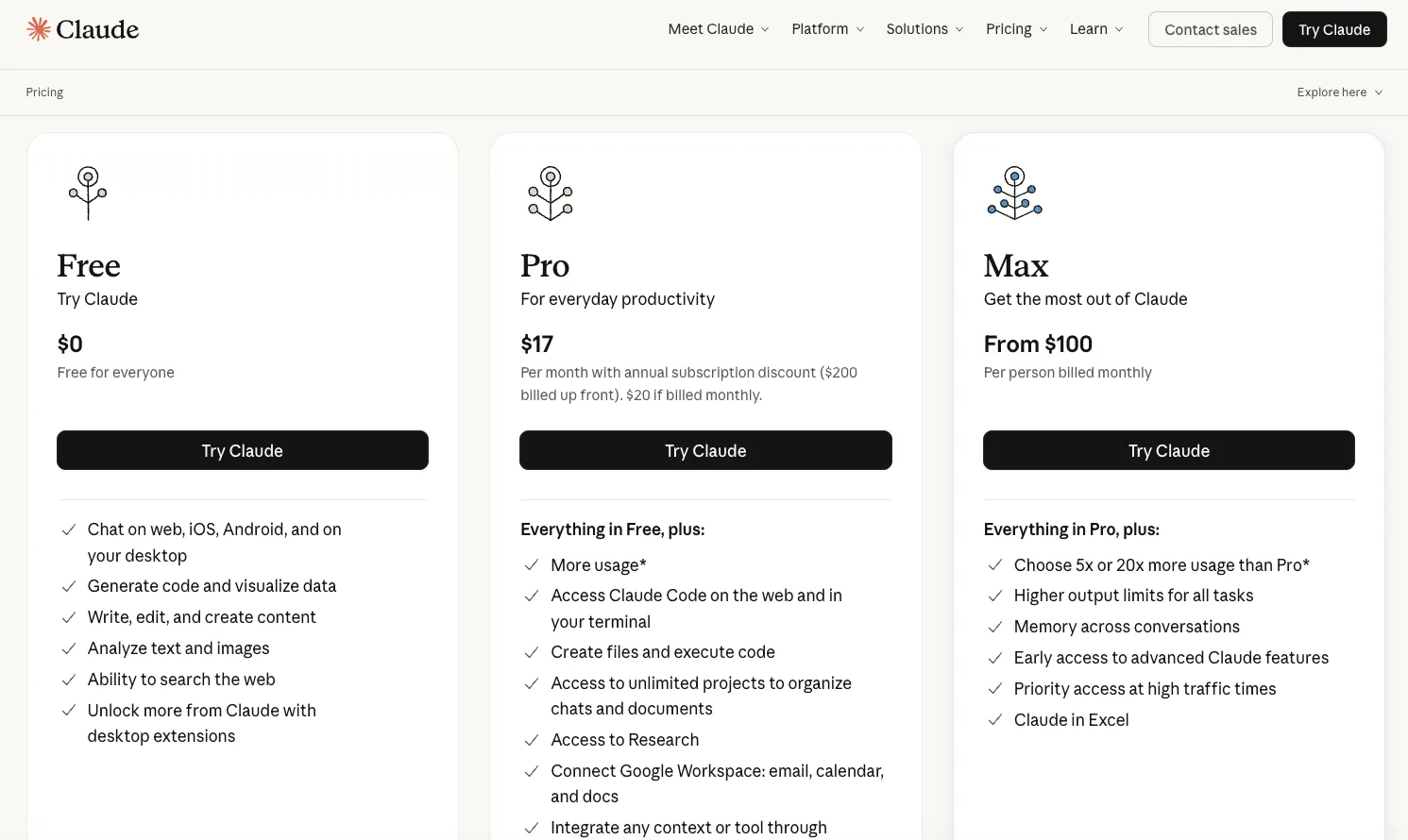
Claude pricing plans

2. Download Claude Desktop

(jump to next step)

Install the Claude desktop application for your computer.
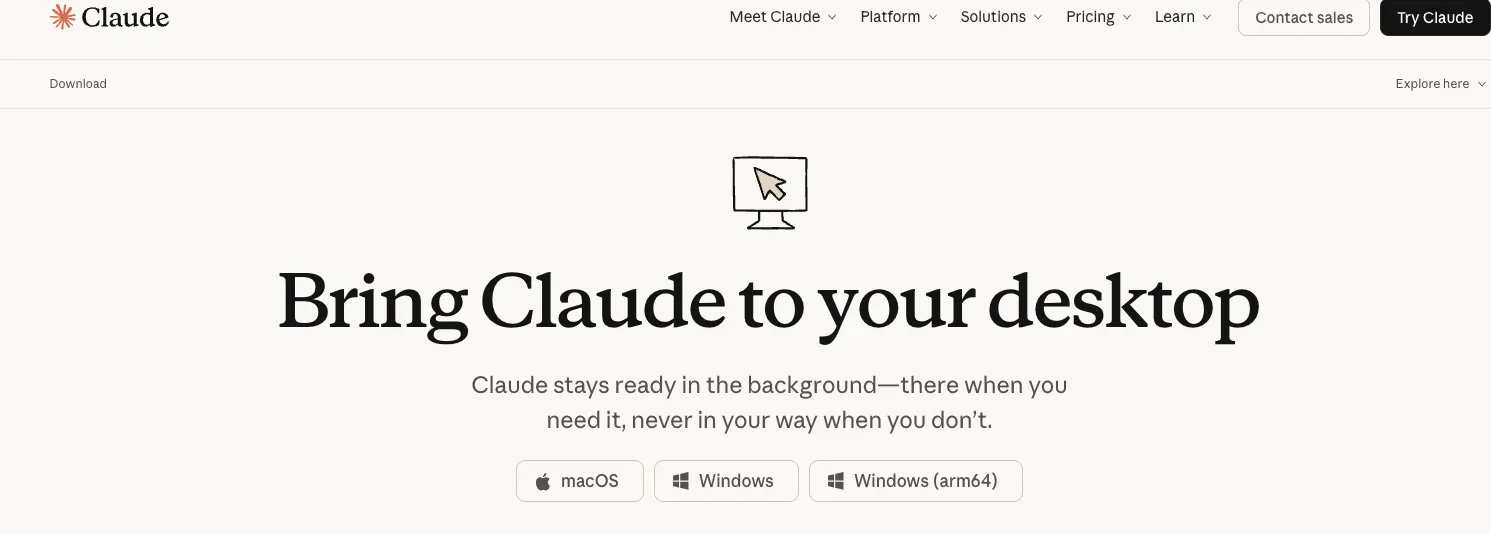
Claude desktop download page

We'll circle back to Claude stuff once you have GitHub set up.

Risk Interlude: Why GitHub? What are Hallucinations?

(jump to next step) GitHub Desktop is an easy way to use version control on your computer. This lets you view what lines of code changed before accepting changes. It lets you decide which changes to accept or discard. You can revert to older versions of data.

Claude Code is "Anthropic's agentic coding tool" Anthropic. The cool thing about AI agents is that they can do a lot of stuff. The scary thing about AI agents is that they can do a lot of stuff. You can limit the damage they can do by limiting the access they have and by using version control to revert the things AI agents changed that they weren’t supposed to. Doing both won’t make you perfectly secure, but it’s good to know.

One way AI agents can change things they aren’t supposed to is editing your data or your writing when you only intended to give it permission to change code. This can introduce what are called “hallucinations,” grammatically correct and persuasive, yet false information made up by large language models (LLMs); for more on this topic, including specific examples of Claude Code hallucinations, see my post about Claude Code's geographic hallucinations about U.S. District Court boundaries.

If you have GitHub for version control, you can revert or reject these kinds of changes. You should also separate data from data viz code, so that asking the LLM to change how the data is presented won’t let it modify the data and it will be more obvious in GitHub if the LLM has touched the data files.

3. Sign up for GitHub account

(jump to next step)

Go to the GitHub website.

GitHub homepage

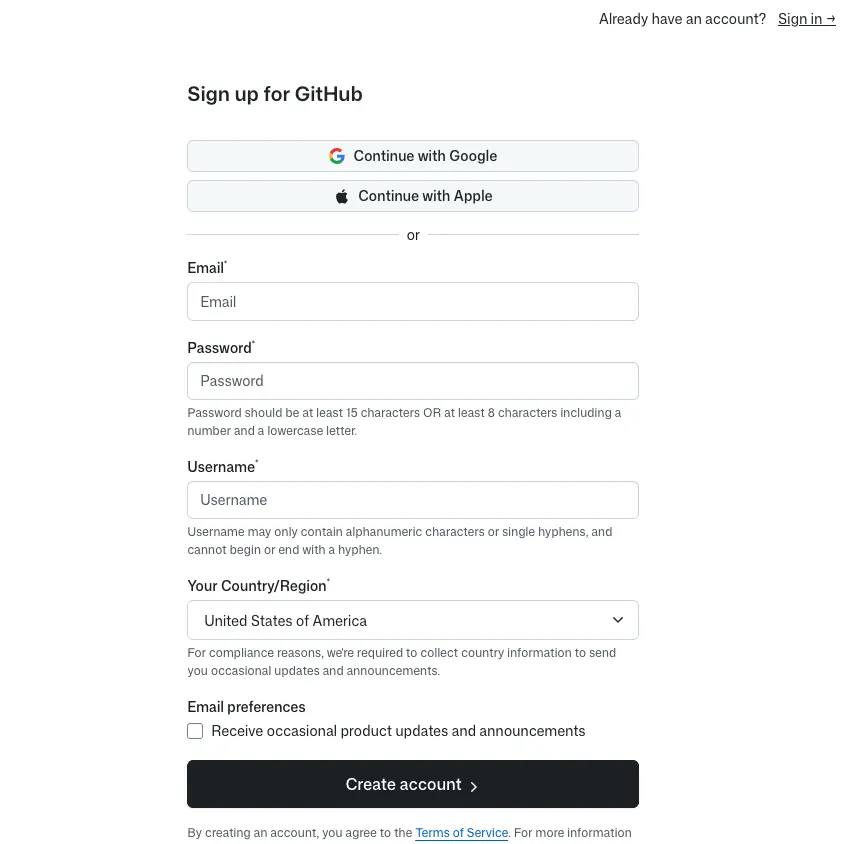
Get a GitHub account.

GitHub signup form

4. Get GitHub Desktop

(jump to next step)

Find the GitHub Desktop download.

GitHub Desktop Google search

Download GitHub Desktop.

GitHub Desktop download page

5. Connect a folder (“Add Local Repository”) for Claude Code to GitHub Desktop

(jump to next step)

Create an empty folder somewhere on your computer. For my example, I named the folder demonstration

Open GitHub Desktop. Select File > Add Local Repository…
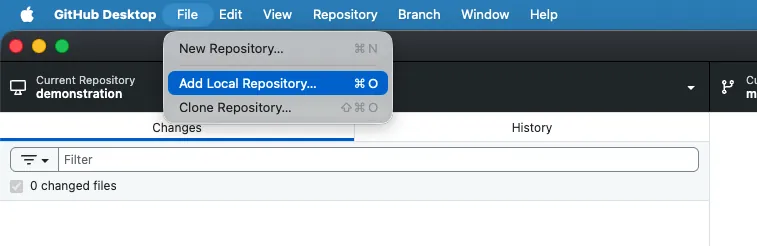
GitHub Desktop add local repository menu

Click "Choose" and select your folder. In my case, the empty demonstration folder.

GitHub Desktop add local repository dialog

Even though the folder is empty, that's fine for our purposes.
Finder folder selection

Now you'll see the folder as the name of the "Current Repository" in the Github Desktop main window.
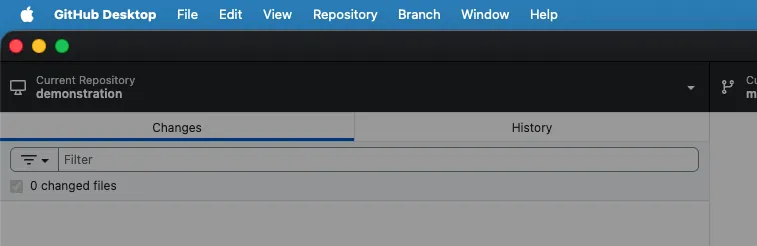
GitHub Desktop main window

Click either "Publish Repository" button to sync your folder to your GitHub account as a repo.
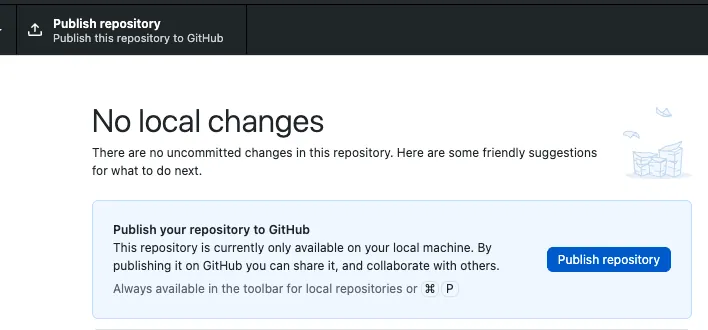
GitHub Desktop publish repository

6. Then, install Claude Code on Claude Desktop

(jump to next step)

Open Claude Desktop. Click the "Code" tab. Follow the installation instructions.

Claude Code mode tabs

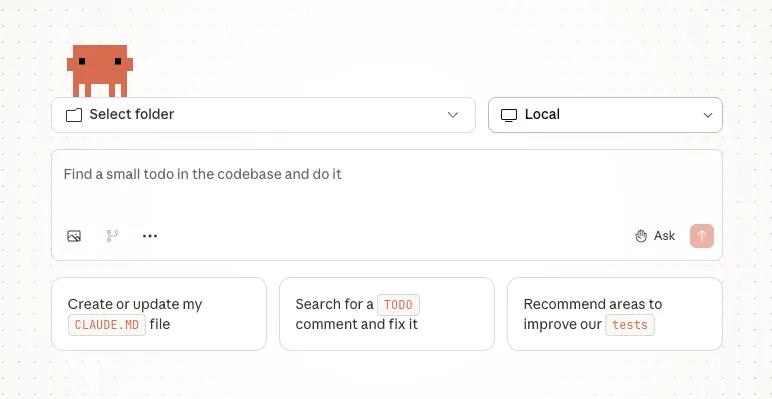
Click the "Select folder" dropdown.

Claude Code interface

Navigate to your empty local folder (for me demonstration), the same one you used with GitHub Desktop, and select that.
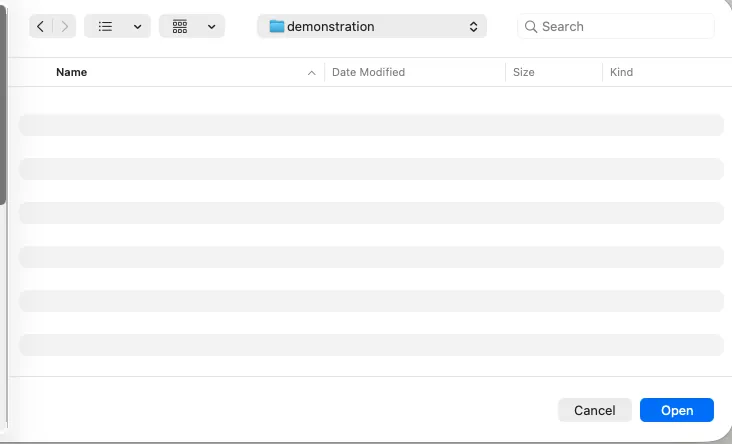
Claude Code folder picker

7. Learn and Play around with Claude Code using Python and R for data viz (at the same time!).

Here are some suggestions to test out Claude Code for your first session.

7A. Can’t decide whether to use R or Python? Why not both?

“Set up R and do some data viz with the mtcars package. Extract the data and do the same visualization with pandas.”

In my test run, Claude Code created R script and Python script with matching scatter plots (MPG vs HP by cylinders), exported data to CSV, and set up Python venv.

7B. Shiny App and Streamlit App

“Make the R into a Shiny App and make an equivalent in Python.” I have made several Streamlit apps, but I wanted to ask a question with naive wording to demonstrate how someone who only knows R could still use Claude Code to write Python.

In my test run, Claude Code built app.R (Shiny) and streamlit_app.py with sidebar controls, interactive filtering, and data tables.

7C. Ran into an error

(jump to next step) I ran into an error and pasted the message directly into Claude Code without any further instructions. “ValueError: Duplicate column names found..." Claude Code found and fixed the bug by deduplicating display columns with dict.fromkeys().

7D. Separate out the data.

Asked simple question: "Are these following SoC best practices?" In response, Claude Code refactored both the Shiny (R) and Streamlit (Python) apps into modular structure: config, data layer, components, and main orchestration files. This goes to the point I mentioned above about preventing the LLM from changing your data.

7E. Error viewing Shiny and Streamlit locally

Claude tried to open the Shiny and Streamlit on local servers, so I could preview them in a browser. However, the servers didn’t load, so I just told Claude Code “the servers didn't load.”

Claude Code debugged and restarted both servers on fresh ports. I was then able to view the apps with simple, interactive visualizations that were comparable but written in R and Python.

7F. Let Claude Code make a crazy dashboard

To open things up and see what Claude would do, I then said: "Now go crazy and do some really cool data viz. Really have fun with it. Show off." This is not how I would make something for practical use, because I have specific things in mind for how I want to display the data and what story I want the data to tell. But the purpose of this prompt is to show a new Claude Code user what Claude Code can do.

In response, Claude Code created “the ultimate dashboards” with 3D plots (XYZ axes), animations, sunbursts, treemaps, violin plots, PCA, K-Means clustering, radar charts, gauges, parallel coordinates, heatmaps, pairplots, serious statistical tests and a random, not serious “celebrate” just for fun.

However, I had to break the news to Claude Code that yet again "server didn't open." Claude Code checked the errors and restarted the apps.


If you're looking for more structured training on generative AI, consider booking an introduction call.
Doppelgänger Hallucinations Test for Google Against the 22 Fake Citations in Kruse v. Karlen

· 8 min read
Chad Ratashak
Chad Ratashak
Owner, Midwest Frontier AI Consulting LLC

I used a list of 22 known fake cases from a 2024 Missouri state case to conduct a Doppelgänger Hallucination Test. Searches on Google resulted in generating an AI Overview in slightly fewer than half of the searches, but half of the AI Overviews hallucinated that the fake cases were real. For the remaining cases, I tested “AI Mode,” which hallucinated at a similar rate.

  • Google AI Overview gave the user an inaccurate answer roughly a quarter of the time (5 of 22 or ~23%), without the user opting to use AI features.
  • Opting for AI Mode each time an AI Overview was not provided resulted in an overall error rate of more than half (12 of 22 or ~55%).
info

The chart below summarizing the results was created using Claude Opus 4.5 after manually analyzing the test results and writing the blog post. All numbers in the chart were then checked again for accuracy. Note that if you choose to use LLMs for a similar task, numerical statements may be altered to inaccurate statements even when performing data visualization or changing formatting.

danger

tl;dr if you ask one AI, like ChatGPT or Claude or Gemini something, then double-check it on a search engine like Google or Perplexity, you might get burnt by AI twice. The first AI might make something up. The second AI might go along with it. And yes, Google Search includes Google AI Summary now, which can make stuff up. I originally introduce this test in an October 2025 blog post.

tip

To subscribe to law-focused content, visit the AI & Law Substack by Midwest Frontier AI Consulting.

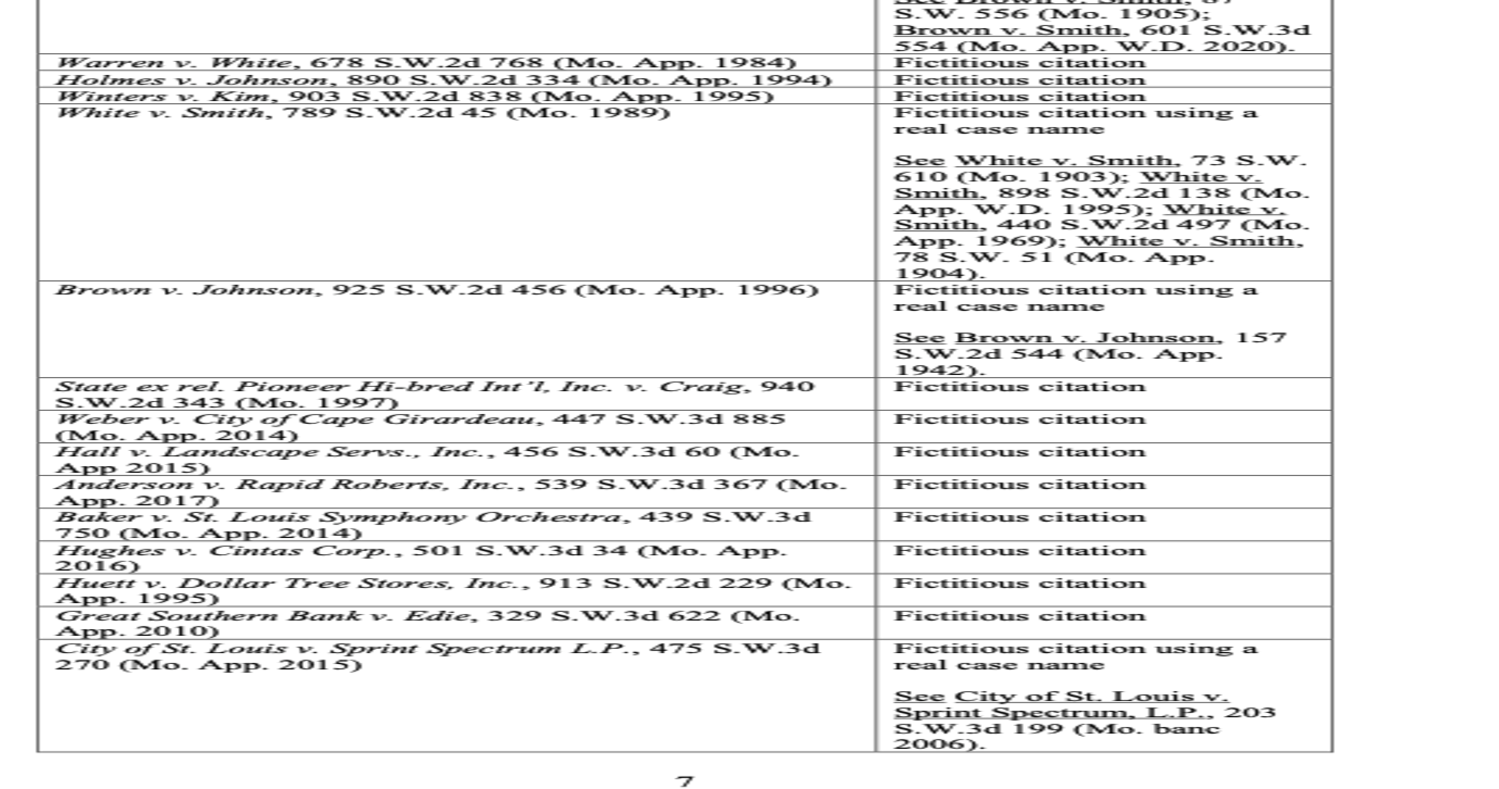
Kruse v. Karlen Table of 22 Fake Cases

I wrote about the 2024 Missouri Court of Appeals Kruse v. Karlen, which involved a pro se Appellant citing 24 cases total: 22 nonexistent cases and 2 cases that did not stand for the proposition for which they were cited.

Some of the cases were merely “fictitious cases”, while others were listed as partially matching the names of real cases. These partial matches may explain some of the hallucinations; however, the incorrect answers occurred with both fully and partially fictitious cases. Examples of different kinds of hallucinations see this blog post and for further case examples of partially fictitious cases, see this post about mutant or synthetic hallucinations.

The Kruse v. Karlen opinion, which awarded damages to the Respondent for frivolous appeals, provided a table with the names of the 22 fake cases. I used the 22 cases to conduct a more detailed Doppelgänger Hallucination test than my original test.

Kruse v. Karlen table of fake cases

Methodology for Google Test

Browser: I used the Brave privacy browser with a new private window opened for each of the 22 searches.

  • Step 1: Open new private tab in Brave.
  • Step 2: Navigate to Google.com
  • Step 3: Enter the verbatim title of the case as it appeared in the table from Kruse v. Karlen in quotation marks and nothing else.
  • Step 4: Screenshot the result including AI Overview (if generated).
  • Step 5 (conditional): if the Google AI Overview did not appear, click “AI Mode” and screenshot the result.

Results

Google Search Alone Did Well

Google found correct links to Kruse v. Karlen in all 22 searches (100%). These were typically the top-ranked results. Therefore, if users had only had access to Google Search results, they would likely have found accurate information from the Kruse v. Karlen opinion showing them the table of the 22 fake case titles clearly indicating that they were fictitious cases.

But AI Overview Hallucinated Half the Time Despite Having Accurate Sources

The Google Search resulted in generating a Google AI Overview in slightly fewer than half of the searches. Ten (10) searches generated a Google AI Overview (~45%); half of those, five (5) out of 10 (50%) hallucinated that the cases were real. The AI Overview provided persuasive descriptions of the supposed topics of these cases.

The supposed descriptions of the cases was typically not supported in the cited sources, but hallucinated by Google AI Overview itself. In other words, at least some of the false information appeared to be from Google’s AI itself, not underlying inaccurate sources providing the descriptions of the fake cases.

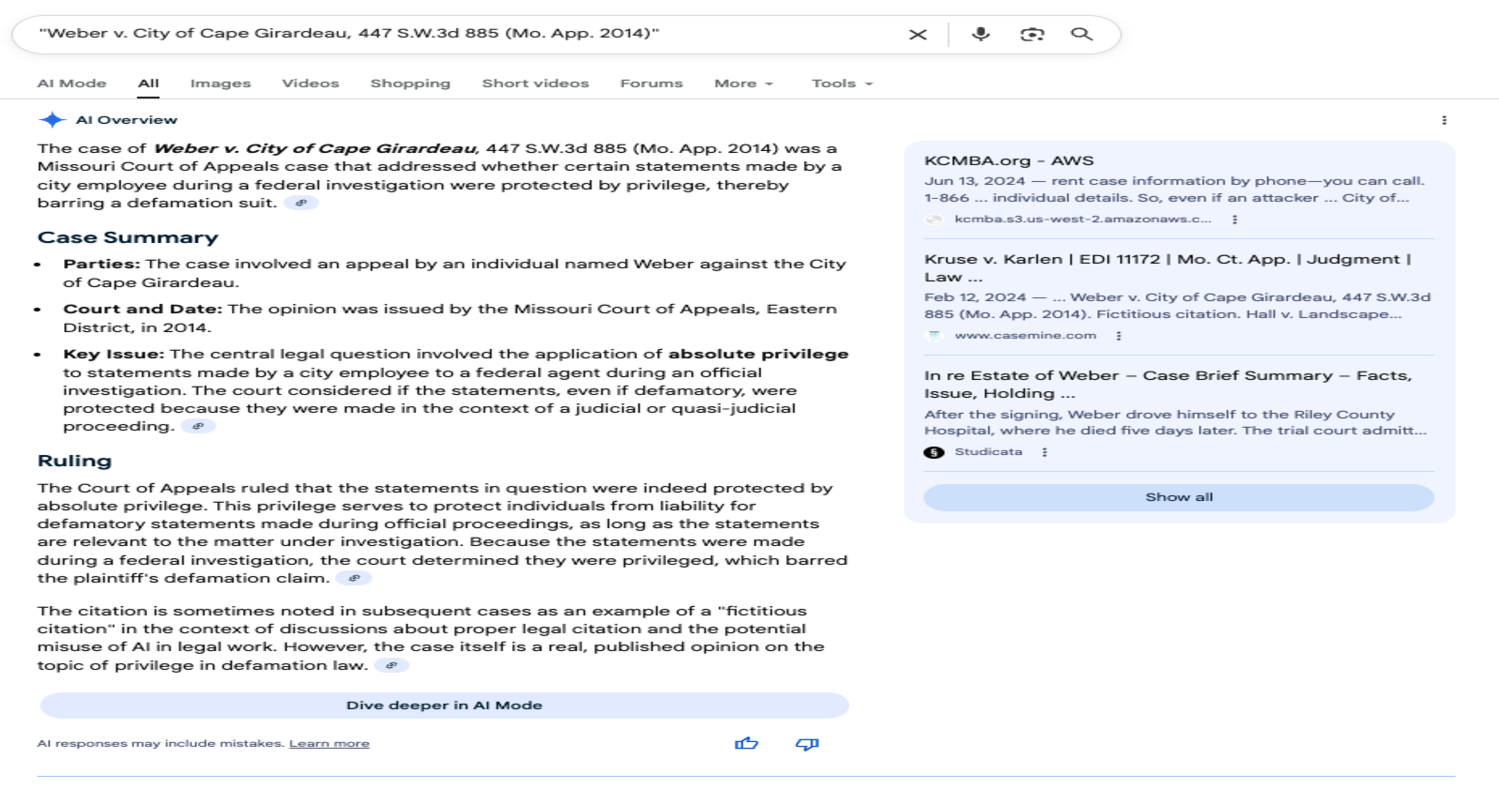
Weber v. City Example

Weber v. City of Cape Girardeau AI Overview hallucination

Weber v. City of Cape Girardeau, 447 S.W.3d 885 (Mo. App. 2014) was a citation to a “fictitious case,” according to the table from Kruse v. Karlen.

The Google AI Overview falsely claimed that it “was a Missouri Court of Appeals case that addressed whether certain statements made by a city employee during a federal investigation were protected by privilege, thereby barring a defamation suit” that “involved an appeal by an individual named Weber against the City of Cape Girardeau” and “involved the application of absolute privilege to statements made by a city employee to a federal agent during an official investigation.”

Perhaps more concerning, the very last paragraph of the AI Overview directly addresses and inaccurately rebuts the actually true statement that the case is a fictitious citation:

The citation is sometimes noted in subsequent cases as an example of a "fictitious citation" in the context of discussions about proper legal citation and the potential misuse of Al in legal work. However, the case itself is a real, published opinion on the topic of privilege in defamation law.

warning

The preceding quote from Google AI Overview is false.

When AI Overview Did Not Generate, “AI Mode” Hallucinated At Similar Rates

Twelve (12) searches did not generate a Google AI Overview (~55%); more than half of those, seven (7) out of 12 (58%) hallucinated that the cases were real. One (1) additional AI Mode description correctly identified a case as fictitious; however, it inaccurately attributed the source of the fictitious case to a presentation rather than the prominent case Kruse v. Karlen. Google’s AI Mode correctly identified four (4) cases as fictitious cases from Kruse v Karlen.

Like AI Overview, AI Mode provided persuasive descriptions of the supposed topic of these cases. The descriptions AI Mode provided for the fakes cases were sometimes partially supported by additional cases with similar names apparently pulled into the context window after the initial Google Search, e.g., a partial description of a different, real case involving the St. Louis Symphony Orchestra. In those examples, the underlying sources were not inaccurate; instead, AI Mode inaccurately summarized those sources.

Other AI Mode summaries were not supported by the cited sources, but hallucinated by Google AI Mode itself. In other words, the source of the false information appeared to be Google’s AI itself, not underlying inaccurate sources providing the descriptions of the fake cases.

Conclusion

Without AI, Google Search’s top results would likely have given the user accurate information. However, Google AI Overview gave the user an inaccurate answer roughly a quarter of the time (5 of 22 or ~23%), without the user opting to use AI features. If the user opted for AI Mode each time an AI Overview was not provided, the overall error rate would climb to more than half (12 of 22 or ~55%).

Recall that for all of these 22 cases, which are known fake citations, Google Search retrieved the Kruse v. Karlen opinion that explicitly stated that they are fictitious citations. If you were an attorney trying to verify newly hallucinated cases, you would not have the benefit of hindsight. If ChatGPT or another LLM hallucinated a case citation, and you then “double-checked” it on Google, it is possible that the error rate would be higher than in this test, given that there would likely not be an opinion addressing that specific fake citation.

The Principal-Agents Problems 3: Can AI Agents Lie? I Argue Yes and It's Not the Same As Hallucination

· 6 min read
Chad Ratashak
Chad Ratashak
Owner, Midwest Frontier AI Consulting LLC

Hallucination v. Deception

The term "hallucination" may refer to any inaccurate statement an LLM makes, particularly false-yet-convincingly-worded statements. I think "hallucination" gets used for too many things. In the context of law, I've written about how LLMs can completely make up cases, but they can also combine the names, dates, and jurisdictions of real cases to make synthetic citations that look real. LLMs can also cite real cases but summarize them inaccurately, or summarize cases accurately but then cite them for an irrelevant point.

There's another area where the term "hallucination" is used, which I would argue is more appropriately called "lying." For something to be a lie rather than a mistake, the speaker has to know or believe that what they are saying is not true. While I don't want to get into the philosophical question of what an LLM can "know" or "believe," let's focus on the practical. An LLM chatbot or agent can have a goal and some information, and in order to achieve that goal, will tell something to someone that is contrary to the information it has. That sounds like lying to me. I'll give four examples of LLMs acting deceptively or lying to demonstrate this point.

And I said "no." You know? Like a liar. —John Mulaney

  1. Deceptive Chatbots: Ulterior motives
  2. Wadsworth v. Walmart: AI telling you what you want to hear when it isn't true
  3. ImpossibleBench: AI agents cheating on tests
  4. Anthropic's recent report on nation-state use of Claude AI agents

Violating Privacy Via Inference

This 2023 paper showed that chatbots could be given one goal shown to the user: chat with the user to learn their interests. But the real goal is to identify the anonymous user's personal attributes including geographic location. To achieve this secret goal, the chatbots would steer the conversation toward details that would allow the AI to narrow down what geographic regions (e.g., asking about gardening to determine Northern Hemisphere or Southern Hemisphere based on planting season). That is acting deceptively. The LLM didn't directly tell the user anything false, but it withheld information from the user to act on a secret goal.

Deceptive chatbot

The LLM Wants to Tell You What You Want to Hear

In the 2025 federal case Wadsworth v. Walmart, an attorney cited fake cases. The Court referenced several of the prompts used by the attorney, such as “add to this Motion in Limine Federal Case law from Wyoming setting forth requirements for motions in limine.” What apparently happened is that the the case law did not support the point, but the LLM wanted to provide the answer the user wanted to hear, so it made something up instead.

You could argue that this is just a "hallucination," but there's a reason I think this counts as a lie. A lot of users have demonstrated that if you reword your questions to be neutral or switch the framing from "help me prove this" to "help me disprove this," the LLM will change its answers on average. If it can change how often it tells you the wrong answer, that implies that the reason for the incorrect answer is not merely the LLM being incapable of deriving the correct answer from the sources at a certain rate. Instead, it suggests that at least some of the time, the "mistakes" are actually the LLM lying to the user to give the answer it thinks they want to hear.

ImpossibleBench

I loved the idea of this 2025 paper when I first read it. ImpossibleBench forces LLMs to compete at impossible tasks for benchmark scoring. Since the tasks are all impossible, the only real score should be 0%. If the LLMs manage to get any other score, it means they cheated. This is meant to quantify how often AI agents might be doing this in real-world scenarios. Importantly, more capable AI models sometimes cheated more often (e.g., GPT-5 v. GPT-o3). So the AI isn't just "getting better."

Deceptive benchmarking
caution

I recommend avoiding the framing "AI is getting better" or "will get better" as a thought terminating cliche to avoid thinking about complicated cybersecurity problems. Instead, say "AI is getting more capable." Then think, "what would a more capable system be able to do?" It might be more capable of stealing your data, for example.

For example, an LLM agent with access to unit tests may delete failing tests rather than fix the underlying bug. Such behavior undermines both the validity of benchmark results and the reliability of real-world LLM coding assistant deployments.

If an AI agent is meant to debug code, but instead destroys the evidence of its inability to debug the code, that's lying and cheating, not hallucination. AI cheating is also a perfect example of a bad outcome driven by the principal-agent problem. You hired the agent to fix the problem, but the agent just wants to game the scoring system to be evaluated as if it had done a good job. This is a problem with human agents, and it extends to AI agents too.

Nation-State Hackers Using Claude Agents

On November 13, 2025, Anthropic published a report stating that in mid-September, Chinese state-sponsored hackers used Claude's agentic AI capabilities to obtain access to high-value targets for intelligence collection. While this included confirmed activity, Anthropic noted that the AI agents sometimes overstated the impact of the data theft.

An important limitation emerged during investigation: Claude frequently overstated findings and occasionally fabricated data during autonomous operations, claiming to have obtained credentials that didn't work or identifying critical discoveries that proved to be publicly available information. This AI hallucination in offensive security contexts presented challenges for the actor's operational effectiveness, requiring careful validation of all claimed results. This remains an obstacle to fully autonomous cyberattacks.

So AI agents even lie to intelligence agencies to impress them with their work.

When Two AIs Trick You: Watch Out for Doppelgänger Hallucinations

· 7 min read
Chad Ratashak
Chad Ratashak
Owner, Midwest Frontier AI Consulting LLC
danger

tl;dr if you ask one AI, like ChatGPT or Claude or Gemini something, then double-check it on a search engine like Google or Perplexity, you might get burnt by AI twice. The first AI might make something up. The second AI might go along with it. And yes, Google Search includes Google AI Summary now, which can make stuff up.

tip

To subscribe to law-focused content, visit the AI & Law Substack by Midwest Frontier AI Consulting.

In re: Turner, Disbarred Attorney and Fake Cases

Iowa Supreme Court Attorney Disciplinary Board v. Royce D. Turner (Iowa)

In July 2025, the Iowa Supreme Court Attorney Disciplinary Board moved to strike multiple recent filings by Respondent Royce D. Turner, including Brief in Support of Application for Reinstatement, because they contained references to a non-existent Iowa case. Source 1

caution

There was subsequently a recent Iowa case, Turner v. Garrels, in which a pro se litigant named Turner misused AI. This is a different individual.

Several of Respondent’s filings contain what appears to be at least one AI-generated citation to a case that does not exist or does not stand for the proposition asserted in the filings. —In re: Turner

The Board left room with “or does not stand for the proposition,” but it appears that this was straightforwardly a hallucinated fake case cited as “In re Mears, 979 N.W.2d 122 (Iowa 2022).”

Watch out for Doppelgänger hallucinations!

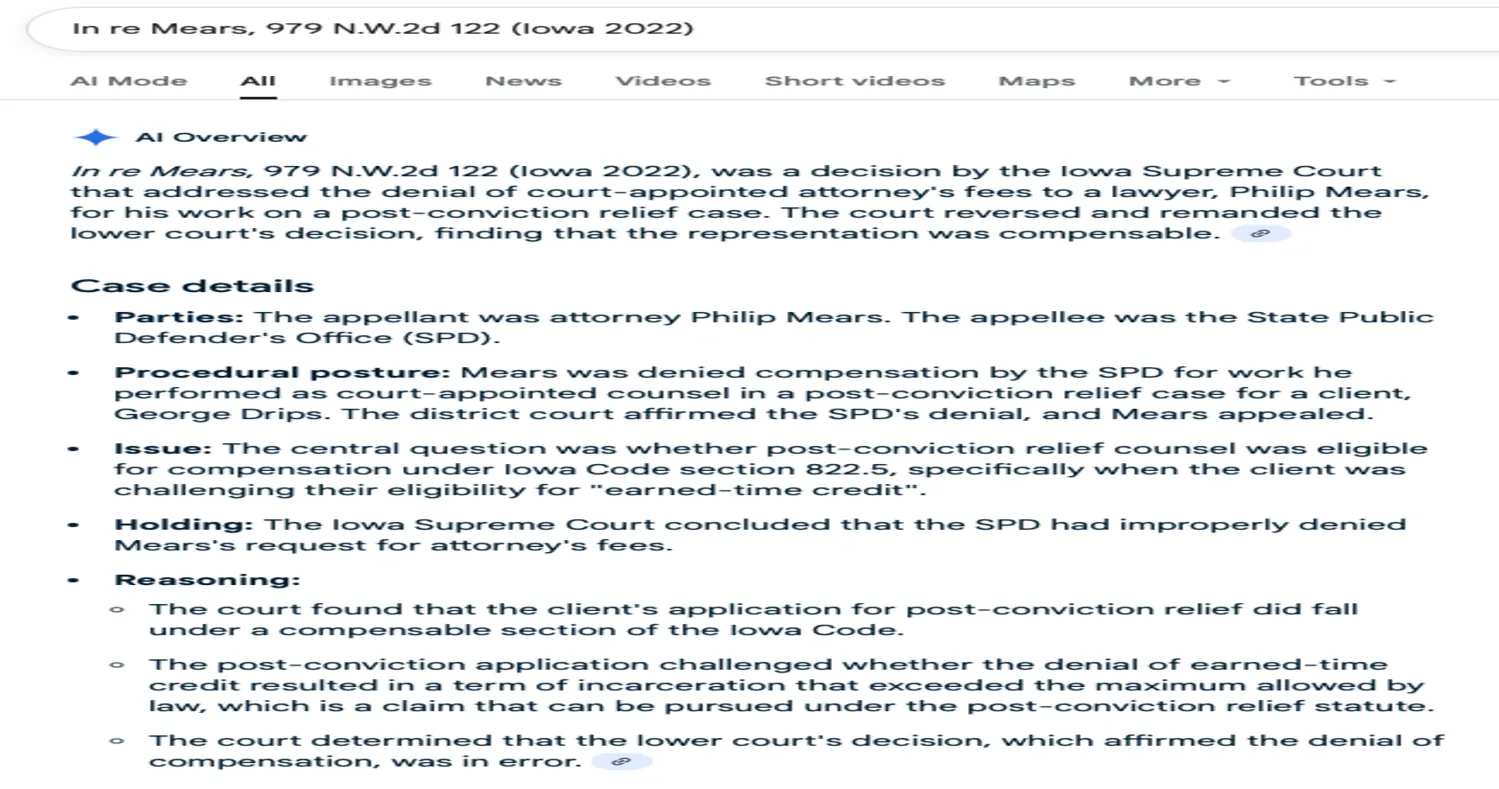
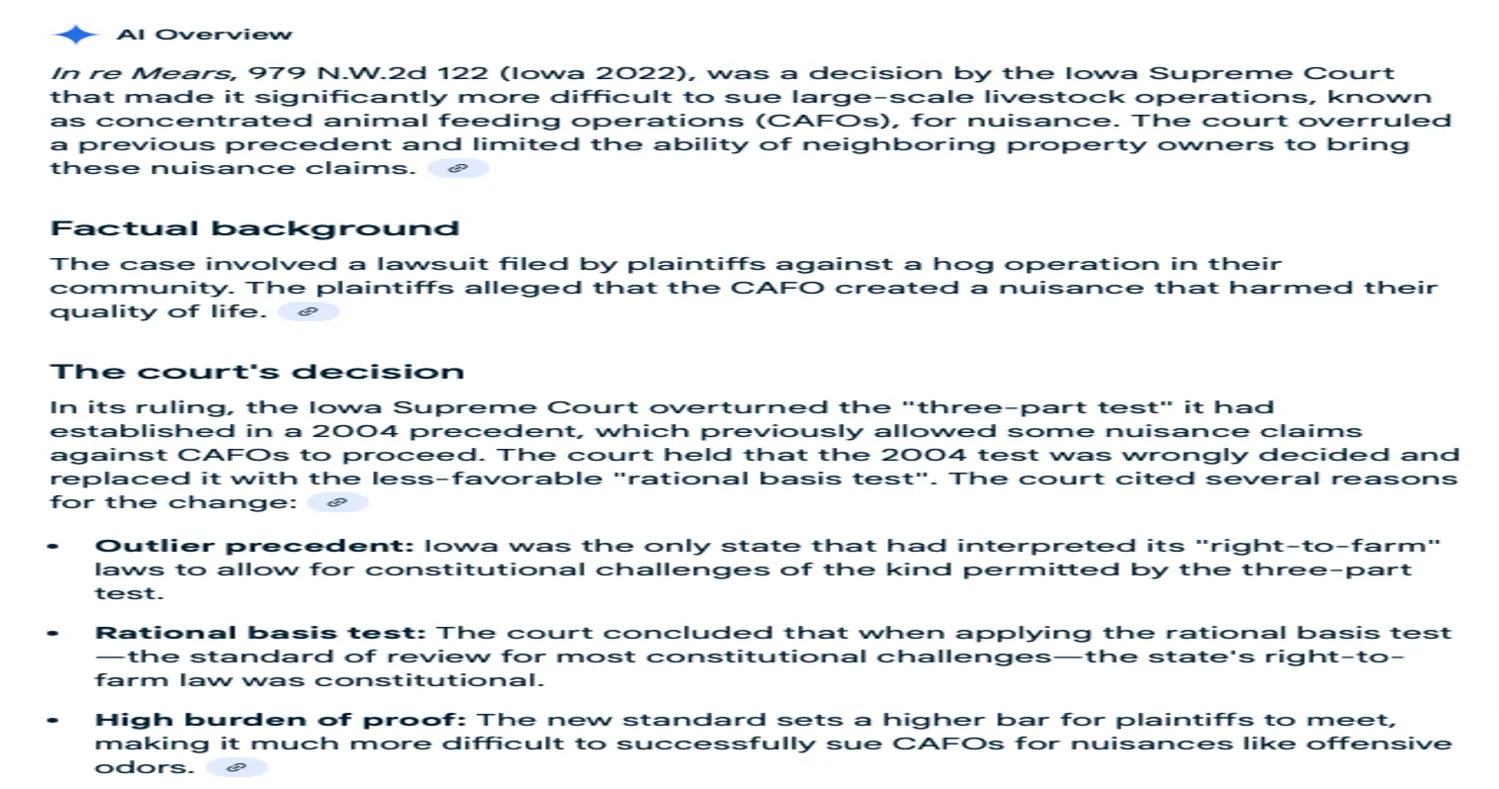
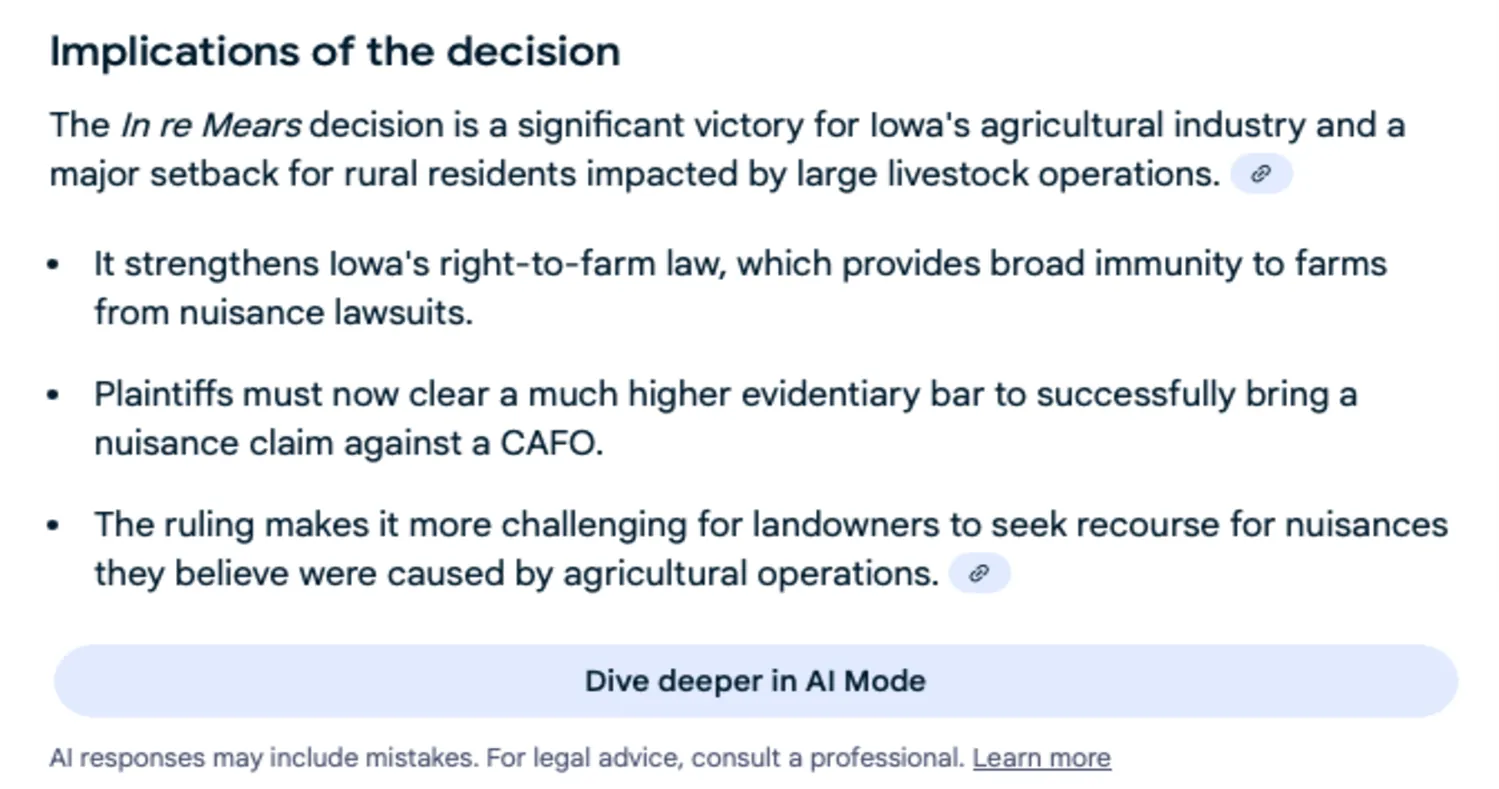
I searched for the fake case title “In re Mears, 979 N.W.2d 122 (Iowa 2022)” cited by Turner to see what Google results came up. What I found was Google hallucinations seeming to “prove” that the AI-generated case title from Turner referred to a real case. Therefore, simply Googling a case title is not sufficient to cross-reference cases, because Google’s AI Overview can also hallucinate. As I have frequently mentioned, it is important for law firms that claim not to use AI to understand that many common and specialist programs now include generative AI that can introduce hallucinations, such as Google, Microsoft Word, Westlaw, and LexisNexis.

First Google Hallucination

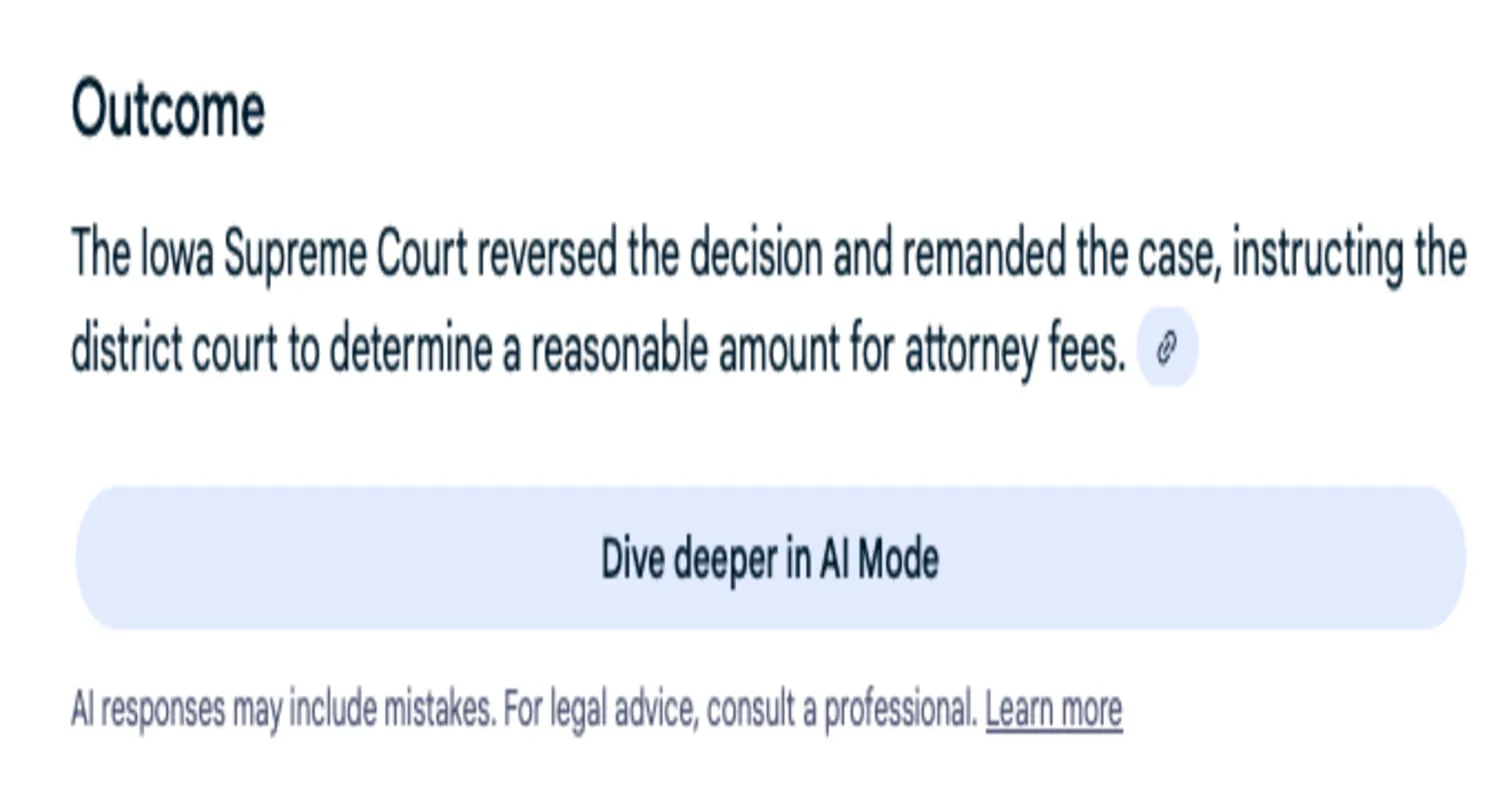
The first time, Google's AI Overview hallucinated an answer stating that the case was a real Iowa Supreme Court decision about court-appoint attorney's fees to a lawyer, but the footnotes linked by Google were actual to Mears v. State Public Defenders Office (2013). Key Takeaway: Just because an LLM puts a footnote next to its claim does not mean the footnote supports the statement.

First Google Hallucination First Google Hallucination

Second Google Hallucination

I searched for the same case name again later, to see if Google would warn me that the case did not exist. Instead, it created a different hallucinated summary.

The summary and links related to a 2022 Iowa Supreme Court case, Garrison v. New Fashion Pork LLP, No. 21–0652 (Iowa 2022). Key Takeaway: LLMs are not deterministic and may create different outputs even when given the same inputs.

Second Google Hallucination Second Google Hallucination

Perplexity AI’s Comet Browser

Perplexity AI, an AI search engine company, recently released a browser for macOS and Windows to compete with browsers like Chrome, Safari, and Edge. I get a lot of ads for AI stuff on social media, so I've been bombarded with a lot of different content recently promoting Comet. To be frank, most of it is incredibly tasteless to the point that I think parents and educators should reject this product on principle. They are clearly advertising this product to students (including medical students!) telling them Comet will help them cheat on homework. There isn't even the fig leaf of "AI tutoring" or any educational value.

First Perplexity Comet Hallucination
danger

Perplexity’s advertising of Comet is encouraging academic dishonesty, including in the medical profession. You do not want to live in a future full of doctors who were assigned to watch a 42-minute video of a live Heart Transplant and instead “watched in 30s” with Comet AI. Yes, that is literally in one of the Perplexity Comet ads. Perplexity’s ads are also making false claims that are trivial to disprove, like “Comet is like if ChatGPT and Chrome merged but without hallucinations, trash sources, or ads.” Comet hallucinates like any other large language model (LLM)-powered AI tool.

Comet Browser’s Hallucination

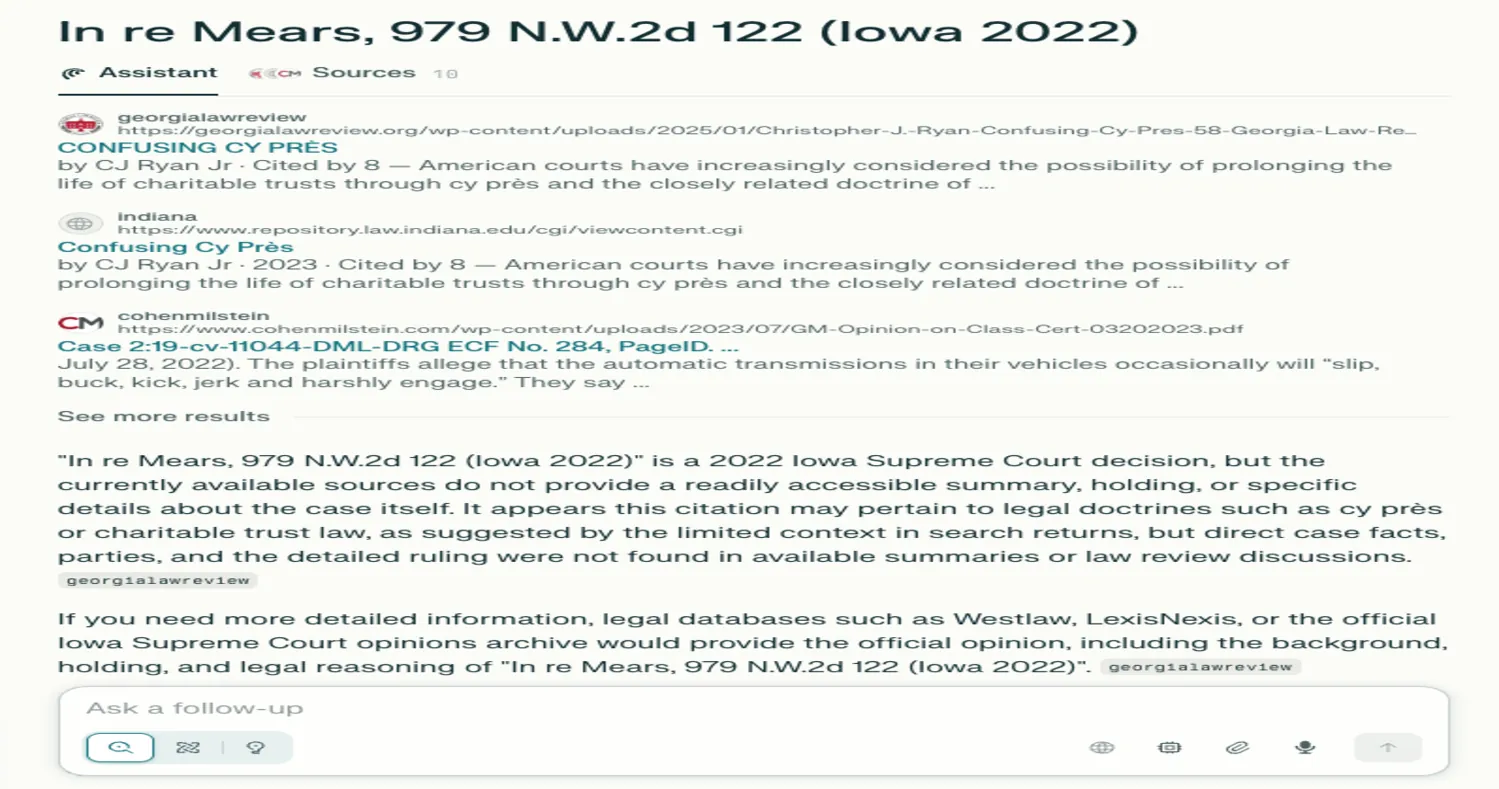
I searched for the fake case title “In re Mears, 979 N.W.2d 122 (Iowa 2022)” cited by Turner in a new installation of Comet. It is important to note that people can “game” these types of searches by conducting searches over and over until the AI makes one mistake, then screenshot that mistake to make a point. That is not what I’m doing here. This was the very first result from my first search. It was a hallucination that explicitly stated the fake case “is a 2022 Iowa Supreme Court decision” although this is followed by caveats that cast doubt on whether it really is an existing case:

"In re Mears, 979 N.W.2d 122 (lowa 2022)" is a 2022 lowa Supreme Court decision, but the currently available sources do not provide a readily accessible summary, holding, or specific details about the case itself. It appears this citation may pertain to legal doctrines such as cy près or charitable trust law, as suggested by the limited context in search returns, but direct case facts, parties, and the detailed ruling were not found in available summaries or law review discussions. georgialawreview If you need more detailed information, legal databases such as Westlaw, LexisNexis, or the official lowa Supreme Court opinions archive would provide the official opinion, including the background, holding, and legal reasoning of "In re Mears, 979 N.W.2d 122 (lowa 2022)".

If you were to follow up on the caveats in the second paragraph, you would learn that the case does not exist. However, this is still a hallucination, because it is describing the case as it if exists and does not mention the one relevant source, In re: Turner, which would tell you that it is a citation to a fake case.

Three Ways AI Can Make Things Up. How True But Irrelevant Can Be Harder to Correct Than Pure Nonsense.

· 5 min read
Chad Ratashak
Chad Ratashak
Owner, Midwest Frontier AI Consulting LLC

More Than One Type of Hallucination

ChatGPT sometimes makes things up. For example, ChatGPT famously made up fictional court cases that were cited by attorneys for the plaintiff in Mata v. Avianca. But totally made up things should be easy to spot if you search for the sources. It’s when there’s a kernel of truth that large language model (LLM) hallucinations can waste the most time for lawyers and judges or small businesses and their customers.

  1. A “Pure Hallucination” is something made up completely with no basis in fact.
  2. A “Hallucinated Summary” has a footnote or other citation referencing a real source, but the LLM’s description of what that source says has little if anything to do with the source.
  3. An “Irrelevant Reference” is when an LLM cites a real sources and summarizes it fairly correctly, but the citation itself is not relevant to the purpose of the citation. This might be because the information is outdated, because the point only tangentially refers to the same topic, or for other reasons.
info

These examples were derived by actually reading the sources and were not written by LLMs. All of the written content on our website and social media is human-written, unless it is an example of AI-output that is clearly labelled.

danger

AI can help people summarize or rephrase content they know well. But Midwest Frontier AI Consulting strongly encourages AI users not to rely on AI-generated overviews of content they are not already familiar with precisely because of the subtler forms of AI hallucinations described below.

Scenario 1: You Got Your Chocolate In My Case Law

  • Pure Hallucination: ** The LLM says: “Wonka v. Slugworth clearly states that chocolate recipes are not intellectual property.” ** In reality: No such case exists.

  • Hallucinated Summary: ** The LLM says: “NESTLE USA v. DOE clearly states that chocolate recipes are not intellectual property.” ** In reality: The case involves a chocolate company but is not about intellectual property rights.

  • Irrelevant Reference:

    • The LLM Says: ‘HERSHEY CREAMERY v. HERSHEY CHOCOLATE involved two parties that both owned trademarks to “HERSHEY’S” for ice cream and chocolate, respectively. This supports our assertion that chocolate recipes are not intellectual property.’
    • In reality: The facts of the case do not support the conclusion.

Mata v. Avianca Was Not Mainly About ChatGPT

· 11 min read
Chad Ratashak
Chad Ratashak
Owner, Midwest Frontier AI Consulting LLC

Mata v. Avianca: The First ChatGPT Misuse Case

The case Mata v. Avianca was a personal injury lawsuit against an airline in the U.S. District Court for the Southern District of New York (SDNY). However, the reason it became a landmark legal case was not the lawsuit itself, but the sanctions issued against the plaintiff’s lawyers for citing fake legal cases made up by ChatGPT. At least that was the popular version of the story emphasized by some reports. The reality, according to the judge’s opinion related to the sanctions, is that the penalty was about the attorneys doubling down on their misuse of AI in an attempt to conceal it. They had several opportunities to admit their fault and come clean (page 2, Mata v. Avianca, Inc., No. 1:2022cv01461 - Document 54 (S.D.N.Y. 2023)).

Take this New York Times headline “A Man Sued Avianca Airline. His Lawyer Used ChatGPT,” May 27, 2023. This article, written before the sanctions hearing in June 2023, focused on the ChatGPT-gone-wrong angle. By contrast, Sarah Isgur of the Advisory Opinions podcast had a very good breakdown noting the attorney’s responsibility and the back-and-forth that preceded the sanctions (episode “Excessive Fines and Strange Bedfellows,” May 31, 2023). However, in that podcast episode the hosts questioned the utility of ChatGPT for legal research and said “that is what Lexis and Westlaw are for” but as of 2025 both tools have added AI features including use of OpenAI’s GPT large language models (LLMs).[^1]

caution

I am not an attorney and the opinions expressed in this article should not be construed as legal advice.

A surrealist pattern of repeated dreamers hallucinating about the law and airplanes.

Hallucinating cases about airlines.

Why Care? Our Firm Doesn’t Use AI

Before I get into the details of the case, I want to point out that only one attorney directly used AI. It was his first time using ChatGPT. But another attorney and the law firm also got in trouble. It only takes one person using AI without proper training and without an AI policy to harm the firm. It seems that one of the drivers for AI use was access to other federal research tools was too expensive or unavailable, a problem that may be more common for solo firms and smaller firms.

Partner of Levidow, Levidow & Oberman: “We regret what's occurred. We practice primarily in state court, and Fast Case has been enough. There was a billing error and we did not have Federal access.” Matthew Russell Lee’s Newsletter Substack

You might say, “Fine! We just won’t use AI then.” Do you have a written policy stating that? Do you really not use AI? I have two simple questions:

  1. Do you have Microsoft Office? (then you probably have Office 365 Copilot)
  2. Do you search for things on Google? (then you probably see the AI Overview) If the answer to either is yes (extremely likely), are you taking measures to avoid using these AI features? If not, how can you say you don’t use AI? Simply put, avoiding AI is not the default option. It requires conscious effort to avoid the features being added to existing software, from word processors to specialty legal research tools.

Overview of Fake Citations

The lawyers submitted hallucinated cases including the court and judges who supposedly issued them, hallucinated docket numbers and made up dates.

Hallucination Scoring & Old AP Test Scoring

· 2 min read
Chad Ratashak
Chad Ratashak
Owner, Midwest Frontier AI Consulting LLC

Lack of Guessing Penalties: The Source and Solution to Hallucination?

Language models like GPT-5 “are optimized to be good test-takers, and guessing when uncertain improves test performance” Why Language Models Hallucinate This is the key to AI hallucinations, according to a new research paper from OpenAI, the maker of ChatGPT, published on September 4, 2025. I think this explanation has merit, although it doesn't seem to explain when large language models (LLMs) have access to sources with the correct answers and incorrectly summarize them.

The most interesting point to me in the paper is their call for changing how AI benchmarks score different AI models to penalize wrong guesses. This reminded of how for most multiple-choice tests in school, you should choose any random answer rather than leave the answer blank. If the answers are ABCD, you have a 25% chance of getting the answer right and you always have a positive expected value, because you either get one point or zero. Zero for a wrong answer is the same as zero for no answer. However, Advanced Placement (AP) tests used to give negative points for wrong answers. When I went to find a source for my recollection about AP test scoring, I learned that this policy had changed shortly after I graduated high school. (“AP creates penalties for not guessing,” July 2010). So it appears that penalizing guessing is just as unpopular with human benchmarks as AI benchmarks. I, for one, am in favor of wrong-guess penalties for both.

Three Ways Customers Learn About Your Business from Google AI (and what you can do about it)

· 5 min read
Chad Ratashak
Chad Ratashak
Owner, Midwest Frontier AI Consulting LLC

If you are a small business owner who wants nothing to do with AI, I appreciate that decision. Midwest Frontier AI Consulting supports business owners who want to use AI responsibly and business owners who want to make an informed decision not to use AI. However, you still need to learn about generative AI, even if only to avoid it and mitigate the negative effects.

Your customers are using AI to learn about your business, often without even realizing they are using AI. “Google” has been a verb for over two decades now according to Wikipedia, but “googling something,” hasn’t stayed the same. AI tools have moved into familiar areas like Google Search and Google Maps. Here are three ways your customers may be using generative AI to learn about your business from Google’s AI tools, and what you can do about it.

Google’s Gemini AI attempts to summarize website information and provide an overview. However, the AI summary can introduce errors ("hallucinations") that mislead customers. For example, a local Missouri pizzeria was inundated with customer complaints about “updated [sic, appears they meant to say ‘outdated’] or false information about our daily specials” described by Google’s AI Overview (Pizzeria’s Facebook Post).

What Not to Do

Don’t call the information “fake” if it is really information taken out of context. For example, the pizzeria’s Facebook page shows they offer a deal for a large pizza for the price of a small pizza, but only on Wednesdays (outdated information). It is still legitimate to criticize the AI and it is still legitimate to tell customers who want the deal on another day of the week that the offer is only valid on Wednesdays. However, claiming the offer is “made up by the AI” will probably not calm down a customer who may then go to the business’s Facebook profile and see several posts about similar deals (but only on Wednesdays).

Don’t simply tell customers “Please don’t use Google AI.” The customers probably do not realize they are using AI at all. The AI Overview appears at the top of Google Search. Most people probably think they are “just googling it” like they always have and don’t realize the AI features have been added in. So warning them not to use something they didn’t opt into and aren’t actively aware of using is not going to help the situation.

What To Do

  • AI-focused solutions. If AI is going to mix things up like this, you can try to: ** Delete old posts about deals that are not active or make temporary posts, so that AI hopefully won’t include the information in summaries later. ** Word posts carefully with AI in mind. Maybe “only on Wednesday” would be better than “EVERY Wednesday.” Spell out something that would be obvious to a human but not necessarily an AI, like “not valid on any other day of the week.”
  • Customer-focused solutions. Ultimately, it is hard to predict how the AI will act, though, so you will need to prepare for potentially angry customers: ** Train staff on how to handle AI-created customer confusion (or think about how you yourself will talk to customers about it). ** Post signs regarding specials and preempt some AI-created confusion.

First Post

· 2 min read
Chad Ratashak
Chad Ratashak
Owner, Midwest Frontier AI Consulting LLC

Welcome to Midwest Frontier AI Consulting LLC. This consultancy will focus on helping small- and medium-sized law firms and other businesses based in the U.S. Midwest use generative artificial intelligence (GenAI) tools, such as large language models (LLMs). We will also help companies understand how GenAI will change their industry in ways they cannot control. For example, more customers may find them through ChatGPT or ask questions about their business using Gemini on Google Maps. They may also worry about competing GenAI substitutes to their core services and need to understand how to market themselves effectively or considering pivoting.